The article demystifies MVP by correcting common myths, outlines three core design principles—single hypothesis, full business loop, and cost efficiency—and provides a detailed six‑step process with real‑world examples, plus six frequent pitfalls to avoid.
The article outlines a step‑by‑step framework for AI product managers to build clear, multi‑layered architecture diagrams that align executives, engineers, and business units, detail functional, scenario, and capability layers, map concrete use cases, and embed feedback loops to turn AI models into tangible business increments.
This guide walks through a seven‑stage, standardized product‑design workflow—from market research and user discovery to prototyping, visual design, development, launch, and continuous iteration—illustrated with a park‑ordering app example and practical tips on deliverables and common pitfalls.
The article argues that a product manager’s core competence lies not in surface skills like requirement analysis, but in three deeper abilities: cultivated taste, the capacity to read human, social, and business contexts, and a blend of imagination, judgment, and interdisciplinary thinking that together drive breakthrough products.
The article argues that as AI lowers the barrier to building products, success now hinges on product "taste"—the ability to judge what to build, what adds value, what feels right, and what users will actually pay for—explained through historical analogies, concrete AI‑product examples, and a step‑by‑step training framework.
In high‑risk industrial AI projects, a 90% model accuracy is meaningless unless the product manager designs multi‑layer safeguards that handle the remaining 10% error, balances false‑positive and false‑negative costs, and ensures the system can recover without human‑only bottlenecks.
In 2026, AI‑powered A/B testing platforms compress the experiment lifecycle from weeks to minutes by automating hypothesis generation, SDK deployment, federated data fusion, and Bayesian stopping, while also introducing multi‑layer statistical safeguards and organization‑wide Experiment‑as‑a‑Service, fundamentally reshaping product experimentation compared to traditional manual workflows.
The article argues that traditional product design, which turns vague requirements into fixed features, no longer works for AI products whose behavior is probabilistic, and outlines how AI product managers should focus on designing manageable uncertainty through clear boundaries, robust evaluation, and closed‑loop feedback.
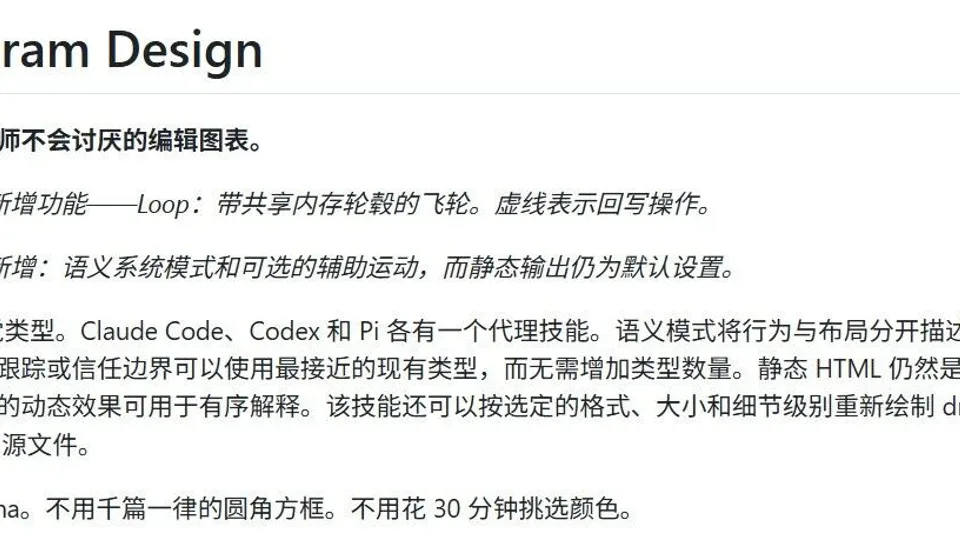
The open‑source Diagram Design tool solves common diagramming pain points by offering 27 native chart types, automatic brand matching, zero‑dependency HTML output, semantic‑first logic, multi‑agent installation, rich export options, and a detailed comparison with Mermaid, draw.io and Figma, while providing a comprehensive pitfalls guide and real‑world use cases.
Product managers must replace lengthy PRDs with a concise, executable product intent that includes problem definition, rules, interactive prototypes, domain models, acceptance criteria, and decision context, enabling both humans and AI agents to understand, implement, and verify requirements consistently across design, development, and testing.
The article introduces the prd‑iterate skill, which uses a four‑section change map (Add, Keep, Must‑Change, Forbidden) to lock iteration contracts, ensuring that second‑round PRD updates and prototype modifications are incremental, clearly documented, and safe for AI‑assisted coding, avoiding full rewrites and ambiguous reviews.
The article explains how PRD, design documents, and SPEC each answer distinct questions—what, why, and how—while outlining their constraints, typical structures, real‑world examples, when to use or skip them, and how they fit into a seamless development pipeline.
The article distills seven make-or-break factors—low entry barrier, end‑to‑end scenario closure, production‑grade maturity, balanced architecture, clear capability limits, story‑driven demos, and focused competitiveness—that determine whether an ontology‑based solution can move from a lab prototype to a reliable product that customers will actually adopt.
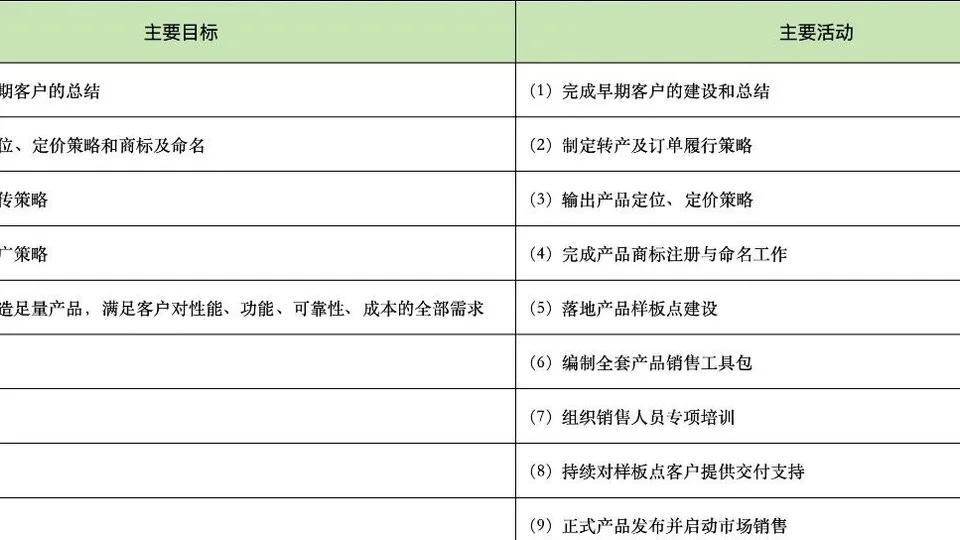
This article explains the IPD (Integrated Product Development) release phase, outlining its purpose, the business‑focused decision gates, the key goals and activities (shown in a table), and the five critical focus areas such as mass‑production preparation and supply‑chain monitoring.
Facing chronic procrastination, the author created a solo‑run self‑discipline app that blends location‑based phone locking, AI‑driven unlock decisions, and strict "crazy mode" settings, while leveraging AI‑generated code and Alibaba Cloud's low‑cost OPC package to keep monthly expenses below 300 yuan.
The article explains what demand means, distinguishes user, market, product and commercial demands, outlines three key characteristics of demand, and presents a scenario‑based demand analysis method with four concrete steps illustrated by a small‑loan product example.
AI can produce multi‑page prototypes in minutes, but this speed pushes product managers to focus on rigorous evaluation—assessing business logic, user flow, visual clarity, and interaction efficiency—using design principles like proximity, alignment, repetition, contrast, and a nine‑point checklist to ensure quality.
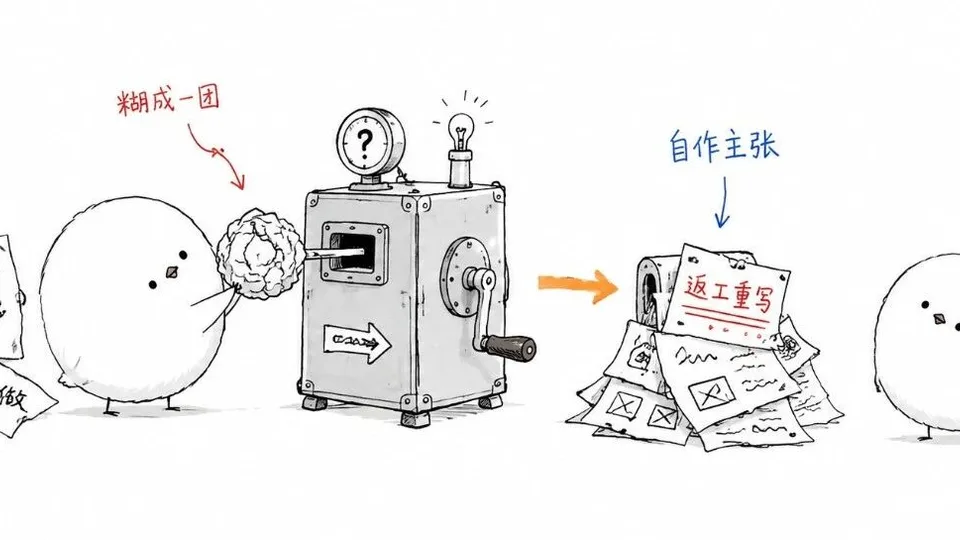
The article dissects how vague requirement phrasing like “let’s do a rough version and run it later” lets requesters transfer risk to developers, cites the 1984 strategic ambiguity theory, shows AI’s role in amplifying the cost, and offers concrete steps to price and record such ambiguity.
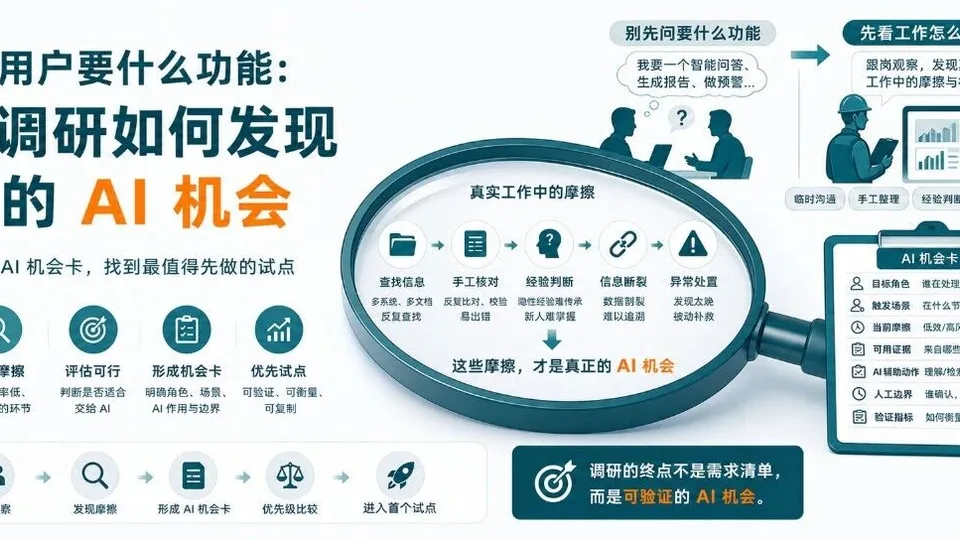
This article argues that effective AI opportunity discovery requires shadowing real work to uncover friction points like repetitive information gathering and delayed exception detection, rather than asking users for feature requests, and introduces the AI Opportunity Card framework to evaluate and prioritize pilot projects based on stable evidence, human boundaries, and verifiable outcomes.
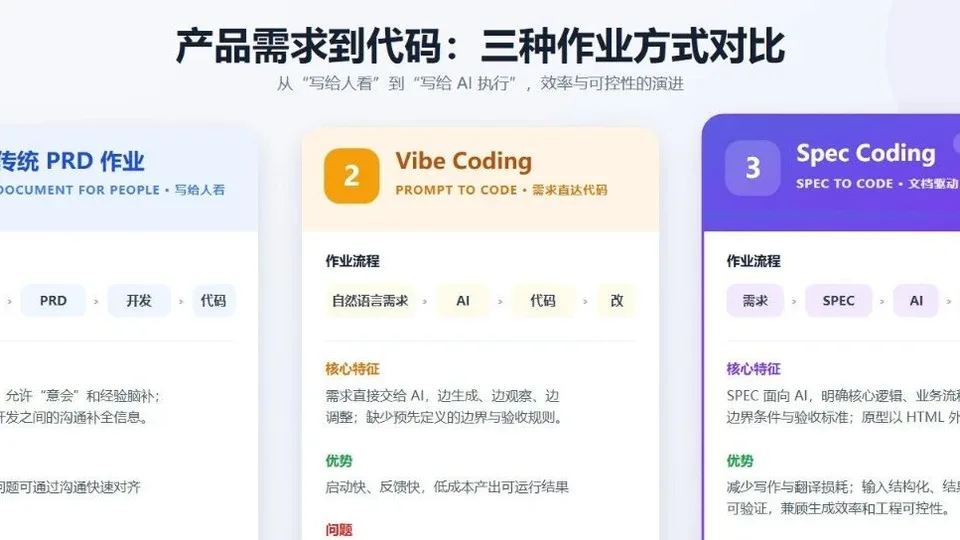
In the AI era, product managers find that AI‑generated PRDs often miss critical boundaries and cause rework, prompting a shift to SPEC‑driven documentation that speaks directly to AI, dramatically improves efficiency, and refocuses the PM role on judgment rather than mere expression.