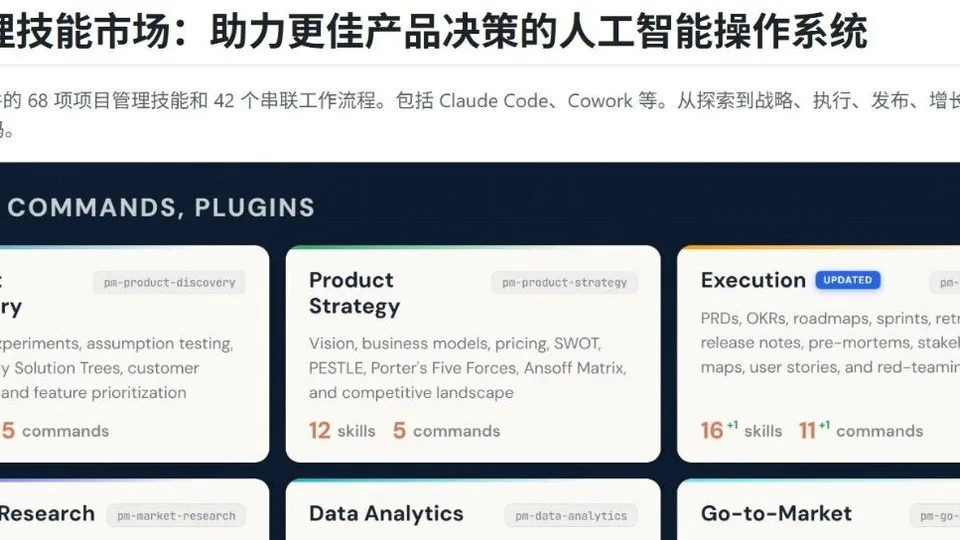
The article details JD Health’s OPC team’s adoption of Anthropic’s open‑source product‑management Skills to create a repeatable, evidence‑driven workflow that guides problem validation, requirement definition, roadmap planning, sprint execution, and post‑launch review without a dedicated product manager.
The author recounts building the Design.md Token Exporter Chrome extension using ChatGPT, Codex, and Gemini, showing how AI lowers coding barriers but forces product teams to confront costly decisions about feature scope, privacy, permissions, and trust, emphasizing disciplined trade‑offs over unchecked ambition.
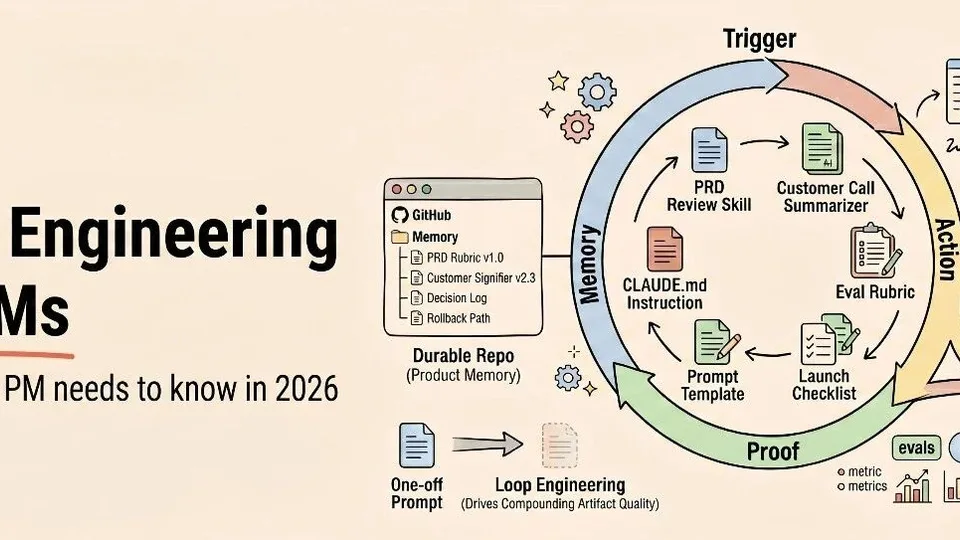
The article explains how product managers must move beyond writing better prompts to building repeatable, evidence‑driven loops that continuously improve long‑term assets such as PRD review rules, interview summarizers, and release checklists, outlining the five loop components, practical examples, and common pitfalls.
The Freedom Ship concept treats a massive floating vessel as a fully functional, permanently mobile city, using a strong system metaphor to organize urban districts, public spaces, circulation and identity, and revealing the design challenges of flow, integration and scalability.
This article provides a comprehensive walkthrough of a project management system’s end‑to‑end architecture, detailing each lifecycle stage—from initiation and planning to execution, monitoring, closure, and post‑mortem—while explaining the essential functional modules, approval flows, resource and risk controls, and industry‑specific extensions.
The article provides a comprehensive walkthrough of an HR management system, detailing the end‑to‑end employee lifecycle, eight core functional modules, supporting workflows, compliance controls, and reporting capabilities that together enable fully automated, strategic HR operations.
The article argues that most so‑called product managers are merely product assistants, outlines the true responsibilities of a genuine PM, and lists essential traits such as logical thinking, clear planning, and rigorous PRDs to avoid resource waste and low delivery efficiency.
This article explains what data metrics are, why they matter, and provides a step‑by‑step methodology—including principles, design, implementation, and best‑practice models such as AARRR and MECE—to construct a robust data metric system that aligns with business goals and improves analysis efficiency.
The article outlines how Chinese AI product managers must turn uncertainty into deliverable versions through rapid learning, cheap experimentation, evidence‑based decisions, and strict compliance, while balancing model capabilities, cost, risk, and leveraging AI as both a teammate and a high‑risk component.
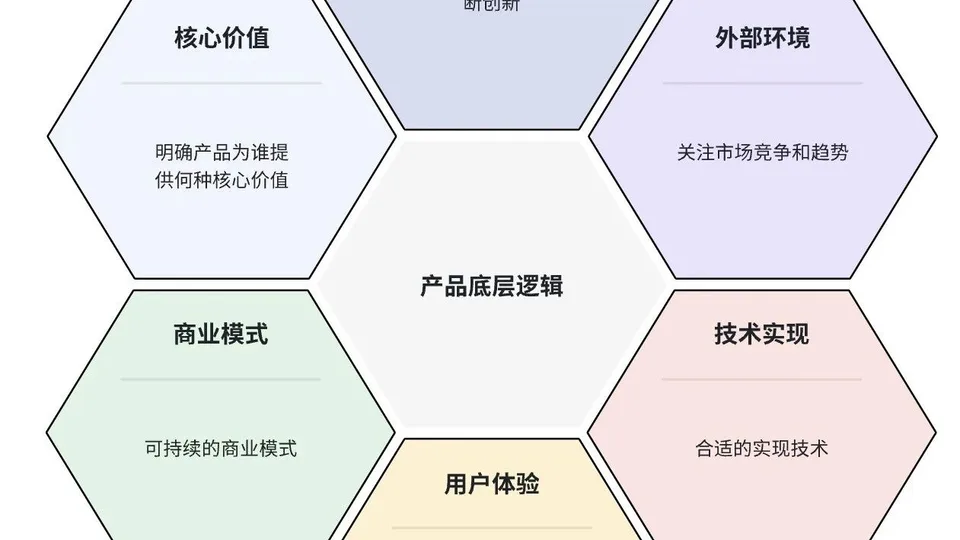
The article outlines a step‑by‑step framework for understanding a product’s core value, business model, user experience, optimization, innovation, market context, and technical feasibility, using a browser app example to illustrate how to think about and answer questions on product fundamentals.
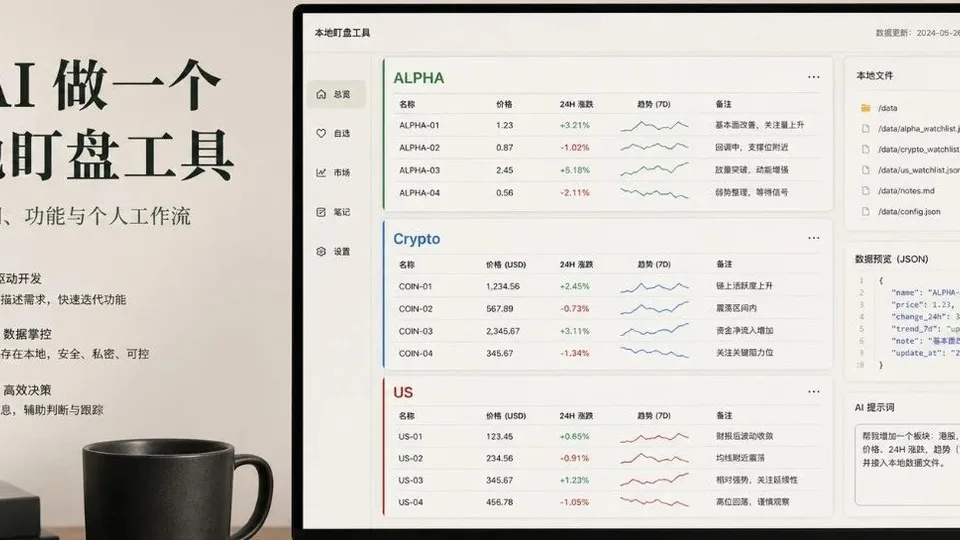
The author describes creating a lightweight local dashboard that monitors Binance Alpha, crypto and US stocks, records purchase quantities and amounts, auto‑calculates averages and profits, and evolves through concrete AI prompts and iterative UI tweaks, all stored in a local JSON file.
The article explains how AI product managers have shifted from creating prototype mock‑ups to designing continuous evaluation "exams", building test suites, analyzing data and model behavior, and coordinating cross‑functional teams to turn "usable" AI into truly "good" AI experiences.
An AI‑era product manager is no longer just a process designer; they must manage uncertainty, handle ambiguous user intent, design graceful failure, and set clear boundaries for model behavior, acting more like a trainer of a living system than a traditional static workflow architect.
The 323‑meter Ulyssia residential yacht reimagines luxury by compressing a full‑scale community—including 122 private residences, hospitality, wellness, and service systems—into a single moving platform, offering designers a case study in scaling, perception management, and long‑term service‑oriented product architecture.
In the AI boom, product managers who can coordinate front‑end, back‑end, algorithm, data cleaning and compute resources and master reverse‑engineering, rapid execution, and patient problem‑solving command six‑figure salaries, as illustrated by refund‑strategy redesign, custom AI客服 deployment, and complex 3D point‑cloud labeling pipelines.
The article explains that while AI tools like VibeCoding can quickly generate functional code, the quality and safety of the output depend entirely on a product manager's ability to write precise, context‑rich requirement documents, covering user scenarios, success criteria, failure handling, and security boundaries.
Anthropic's Fable security model silently downgrades cybersecurity-related requests to a weaker model without user consent, while imposing mandatory 30-day data retention, destroying trust across product, brand, and industry levels.
The article explains how product managers can avoid the perfectionism trap by focusing on the most valuable 80% of user needs with about 60% of the effort, using data‑driven ROI formulas, a three‑step decision process, and a systematic "freeze" framework for low‑impact edge cases.
The article examines how AI dramatically speeds up product‑manager tasks such as PRD writing, user‑research summarization, and competitive analysis, but warns that over‑reliance erodes independent thinking, judgment, and differentiation, citing MIT and Microsoft‑Carnegie‑Mellon studies, and offers concrete practices to preserve critical product‑management skills.
The article breaks down ten high‑frequency Claude Code Skills—from PRD generation to OKR coaching—drawn from the open‑source libraries phuryn/pm‑skills and deanpeters/Product‑Manager‑Skills, explains their core value, provides step‑by‑step installation commands for Claude Code, Claude Cowork and CLI, and offers role‑based deployment and troubleshooting tips to shift product and operations leaders from repetitive execution to strategic decision‑making.