The article explains why simply stating that a large‑scale experiment cannot be done during the rebuttal period is insufficient, and outlines how to detail experiment costs, provide a representative smaller study, and interpret its significance to satisfy reviewers' core concerns.
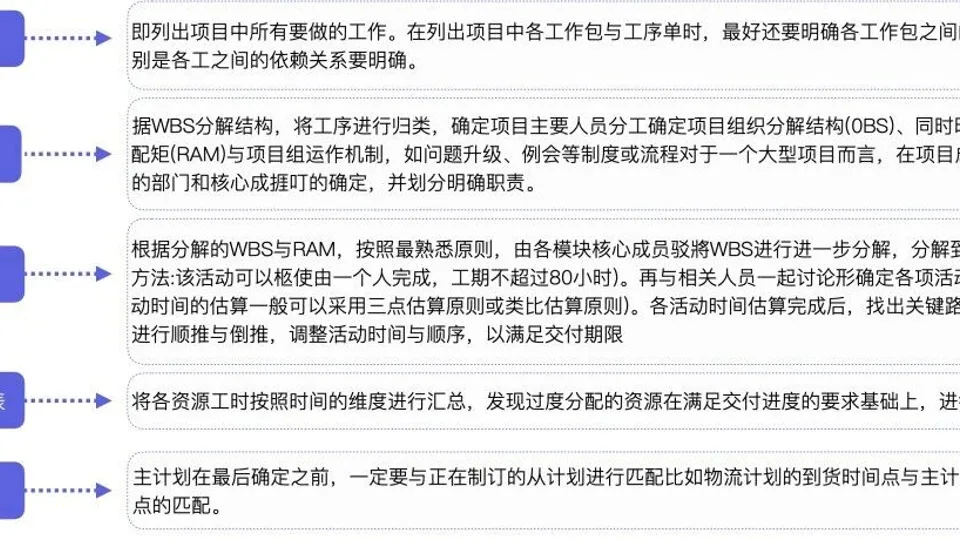
This article explains the IPD framework—originating from PACE theory and refined by IBM—covers its six development phases and decision‑gate criteria, then details three project‑planning techniques (Gantt chart, milestone method, network diagram) and provides a comprehensive project‑plan template with examples and key success factors.
The author explains how a three‑year partnership with the CTO created a tech team that follows a clear rhythm, focuses on delivering quarterly and monthly commitments, values execution over endless tasks, and demonstrates that true programmer productivity comes from effectiveness, not constant busyness.
Over ten months, the testing team at a financial‑grade SaaS company transformed its approach from chasing coverage numbers to a resilience‑oriented metric, raising critical module unit‑test coverage from 42% to 89%, achieving 99.6% integration‑test pass rate, and shortening release cycles by 40% through code decoupling, contract‑driven development, a three‑dimensional coverage health dashboard, and treating tests as living specifications.
A recent Agent Harness test comparing Pi, OpenCode, and DSH shows Pi completing 20 of 30 tasks at $0.028 per task versus OpenCode's 14 tasks at $0.195, while the article analyzes how each system distributes complexity, handles extensions, server boundaries, and runtime composability, highlighting trade‑offs for real‑world migrations.
The article argues that AI lowers cross-stack execution costs, prompting a shift from frontend/backend separation back to full-stack—redefined as end-to-end business capability ownership with AI assistance—while professional judgment, risk decisions, and independent verification remain essential and must be allocated based on task complexity and risk.
The article explains IPD’s origins from the PACE theory, outlines its six‑stage process with business‑focused decision reviews, and details how increasingly detailed project plans—big, medium, and small—reduce uncertainty and keep projects on track.
The article analyzes how AI‑assisted coding dramatically improves individual developer productivity yet leaves end‑to‑end delivery speed unchanged, breaks delivery time into value‑creation and organizational‑friction components, proposes a four‑step efficiency‑governance framework, defines new PM skills, and reports concrete results from the Tencent Health project where median cycle time fell from 19 to 9 days and long‑tail demands dropped from 35% to 7%.
This article explains the origins of Integrated Product Development (IPD), outlines its six-stage process with business‑focused decision review points, and details the basic procedure for creating a project plan that meets those criteria.
With AI agents expanding individual productivity, the authors identify a bottleneck in collaborative bandwidth and propose a three‑layer AI organization model implemented as TencentDB Agent Memory, which structures team knowledge into four asset types, validates them through extensive session analysis, and demonstrates a rise in task completion from 60% to 80% on SWE‑bench benchmarks.
This article argues that Vibe Coding — rapid AI-driven code generation — increases anxiety because generation speed outpaces human judgment and verification. It distinguishes exploration from delivery, showing how missing problem definition, design baselines, and independent verification turn fast output into systemic chaos, and prescribes guardrails like explicit boundaries, acceptance criteria, and deliberate pauses to retain engineering control.
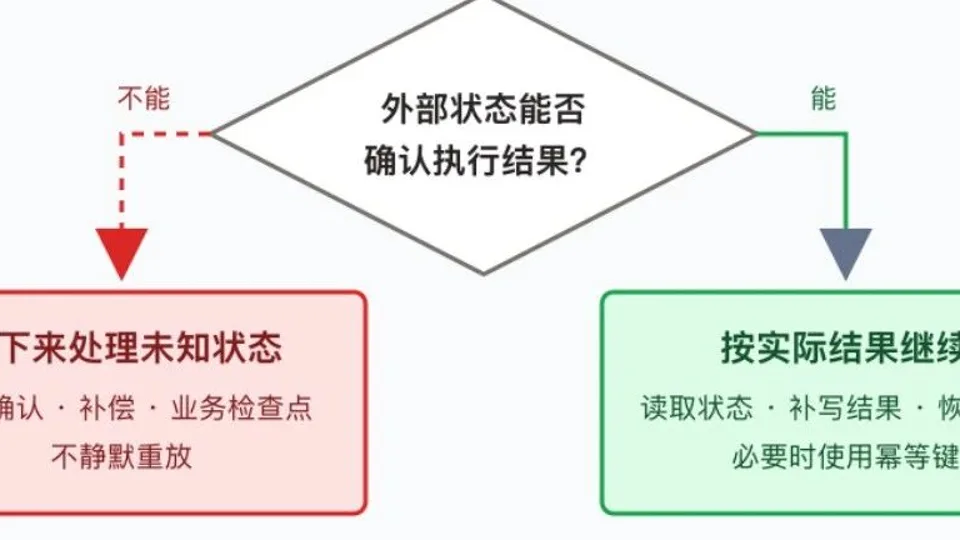
The article details ForgeX's integration of a real project (Bracelet) which halted at 'action_required' due to incomplete Knowledge/Skill/MCP, demonstrating the platform's safe-stop design; separately, an end-to-end verification in PostgreSQL with a simulated requirement proved the full pipeline works when conditions are met, emphasizing that a releasable candidate is not a production release.
The article outlines a five‑stage framework for problem‑solving, moving from reactive fire‑fighting and anxiety to strategic use of problems as opportunities, illustrated with real‑world cases of a junior programmer, a tech director, and a product manager.
The article outlines why vague claims like "the performance gain justifies the cost" fail to satisfy reviewers, and provides a structured rebuttal framework that details the source, magnitude, and controllability of extra computational overhead, supported by concrete examples and metrics.
The article argues that adult mindsets, responsibility, and work standards are hard to reshape, so managers should focus on selecting the right hires early and saying "no" to mismatches rather than hoping slow coaching will change underperforming team members.
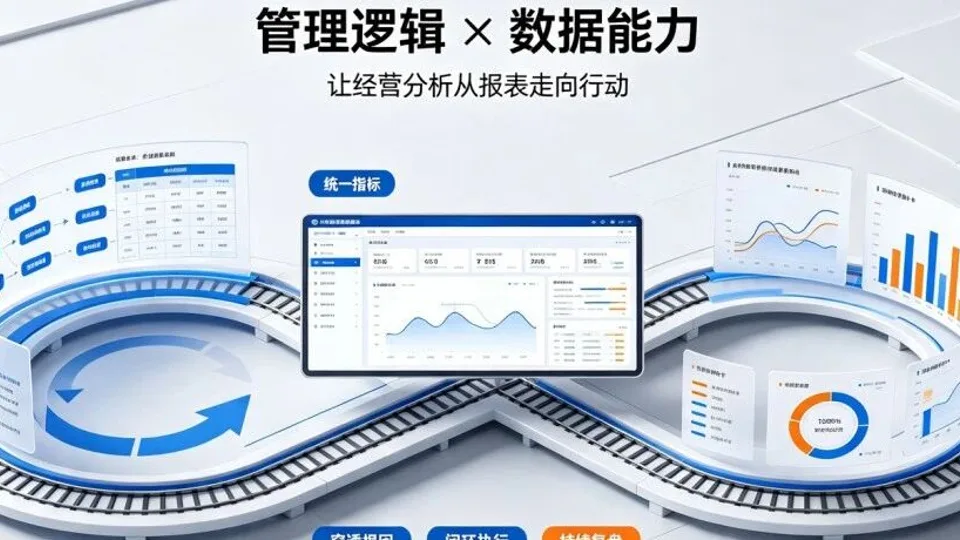
The author shares lessons from three versions of an operational analysis platform, showing that successful platforms require dual-wheel drive of management logic (a structured 'Five Questions' framework for root-cause analysis) and data capability (automated pre-meeting anomaly detection, in-meeting drill-down, and post-meeting closed-loop action tracking), turning dashboards into decision engines.
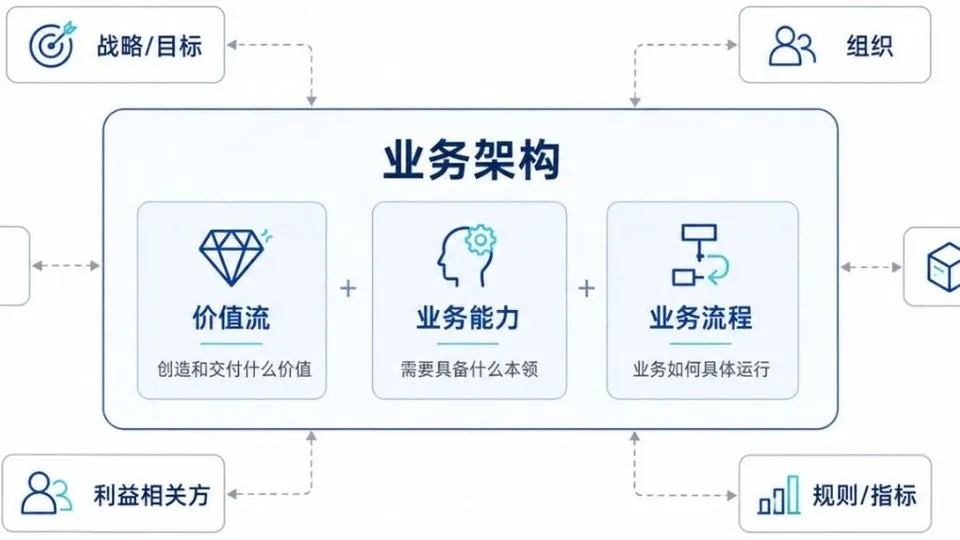
This article compares three major business architecture frameworks—BIZBOK, TOGAF, and OMG BACM—detailing their core domains (capabilities, value streams, information, organization, processes, strategy) and converging on the principle that business architecture is a holistic, multi-view blueprint rather than a single model.
The article argues that seed‑ and Series‑A engineering teams should stop adding management processes and instead focus on hiring self‑driven engineers, keeping communication lightweight, protecting deep‑work time, and only introducing formal structures when the team grows beyond 20 members.
This article introduces the Evidence Plane architecture, arguing that AI agents' completion claims must be backed by independently verifiable evidence—including code diffs, test reports, security scans, approvals, and production metrics—organized through Evidence Contracts, automated verification, and traceable evidence bundles to enable trustworthy AI-driven software delivery.
The article explains IPD’s origins in PACE theory, outlines its six‑stage process with business‑focused decision gates, and advises new project managers to avoid overloading a single master plan by breaking work into small tasks and assembling sub‑plans with modern software tools.