In this round‑table discussion, industry experts analyze Alibaba Cloud's historic price reductions, compare self‑built IDC versus public cloud economics, share iReader's phased migration experience, explore the broader value of cloud services beyond raw resources, and examine how large‑model AI workloads reshape cost and innovation strategies.
This article provides a comprehensive overview of IaaS, detailing its definition, core characteristics, underlying technologies such as virtualization and automation, and common use cases, while highlighting benefits like cost reduction, elasticity, high availability, and security in cloud environments.
This article explains how virtual machine traffic is forwarded across compute nodes in an IAAS cloud using overlay protocols such as VXLAN, detailing L2/L3 inter‑node forwarding, control‑plane designs, and forwarding‑plane implementations with Linux‑Kernel OVS, DPDK, NIC offload, and VDPA.
In a detailed round‑table discussion, industry leaders analyze Alibaba Cloud's historic price cuts, compare self‑built IDC versus public cloud economics, share iReader's migration journey, and explore how AI large‑model services and PaaS offerings amplify cost‑efficiency and innovation in the cloud era.
Broadcom’s acquisition of VMware has triggered a sweeping transition from perpetual licenses to a subscription‑only model, cutting dozens of products, reshaping pricing, and leaving cloud‑focused enterprises uncertain about future costs, and the strategic direction of their virtualization infrastructure.
This guide shows how to combine GitHub Codespaces, Docker‑in‑Docker, and KinD to create a fully functional, cloud‑based Kubernetes development environment that eliminates local setup, improves accessibility, and reduces costs, while providing step‑by‑step instructions and essential commands for deployment and testing.
This article explains how virtual networks operate in cloud computing by covering virtual NIC implementation, Virtio frontend/backend mechanisms, KVM signal interaction, and both layer‑2 and layer‑3 forwarding within a node using OVS and related technologies.
This article provides a comprehensive technical comparison of four major virtualization solutions—VMware ESX, Microsoft Hyper‑V, Xen, and KVM—covering their architectural models, virtualization techniques, hardware support, and typical use‑cases to help readers understand their strengths and trade‑offs in cloud environments.
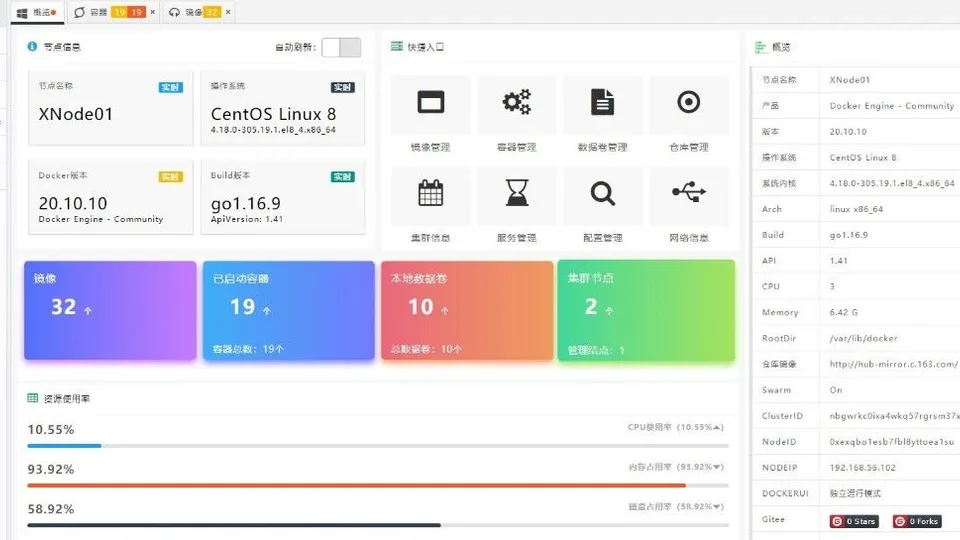
This article introduces three free Docker visual management tools—Docker Desktop, Portainer, and Docker UI—detailing their key features, cross‑platform support, user‑friendly interfaces, and monitoring capabilities to help developers and ops teams choose the most suitable solution for container management.
This article provides a comprehensive overview of cloud architecture, detailing its definition, three-layer model (SaaS, PaaS, IaaS), key advantages and disadvantages, and essential management functions such as user, monitoring, billing, security, and resource management, while also offering promotional resources for deeper learning.
This article presents a comprehensive overview of the challenges, key technologies, and future applications of a unified storage platform built on Alluxio for China's national supercomputing internet, detailing its architecture, data flow strategies, deployment status, and industry use cases across multiple sectors.
This article provides a comprehensive overview of cloud computing architecture, covering service models (IaaS, PaaS, SaaS) with real‑world examples, deployment models (public, private, hybrid), key components such as virtualization and containers, and essential management and automation practices.
This article provides a detailed technical comparison of the four leading virtualization architectures—VMware ESX, Microsoft Hyper‑V, Xen, and KVM—covering their design models, hypervisor implementations, CPU/Memory/I‑O handling, and practical deployment scenarios to help readers choose the right solution.
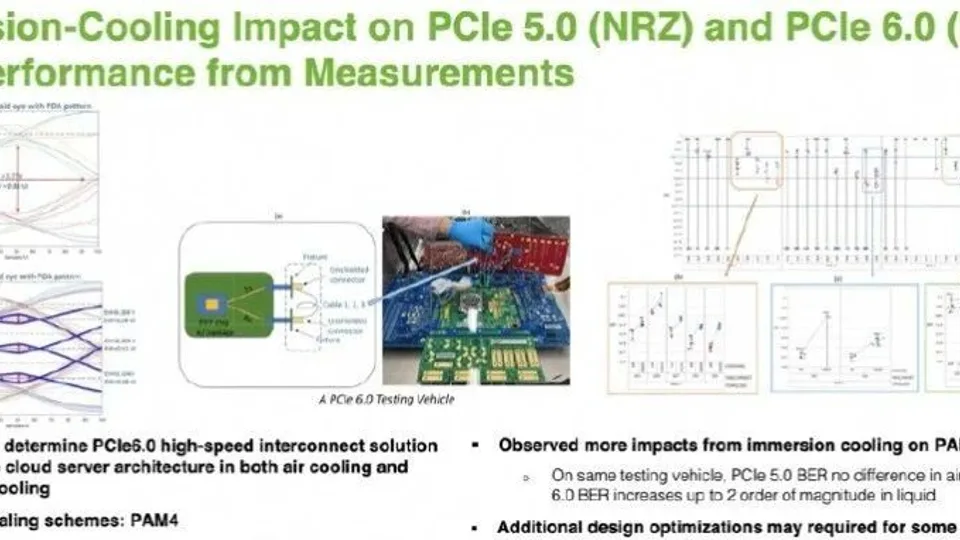
Alibaba Cloud announced that two of its server‑R&D papers were selected for DesignCon and ECTC 2024, presenting measurement‑based studies on PCIe 5.0/6.0 link performance under air and immersion cooling and a long‑term reliability analysis of crystal oscillators in various immersion‑cooling fluids, insights that guide next‑generation server architecture and large‑scale liquid‑cool deployment.
This step‑by‑step guide explains how to set up cost‑effective dedicated servers on Tencent Cloud for the popular games Phantom Beast Palu and Enshrouded, covering game selection, machine configuration, template deployment, and client connection details.
This guide walks you through purchasing a Volcengine cloud server, configuring security groups, and installing Palworld on both Linux and Windows instances using scripts or manual commands, enabling you to run a private Palworld server accessible via the public IP and port 8211.
This guide shows how to install Multipass on macOS, create and manage lightweight Ubuntu virtual machines using simple CLI commands, configure resources, mount volumes, transfer files, and automate setup with cloud‑init, providing a fast alternative to heavyweight virtualization tools for local development.
In his 2023 keynote, Baidu Vice President Xie Guangjun unveiled an AI‑native cloud architecture featuring 7th‑gen G7 servers, Kunlun R300 and Ascend 910B instances, a gateway with X86, programmable switches and FPGA, unified storage (TafDB, Aries, BOS, CDS, PFS), Baige 3.0 AI infrastructure, an intelligent computing network, GaiaDB 4.0, BMR Spark 3.2, SugarBot natural‑language analytics, distributed edge and private cloud, and video and low‑code platforms.
This article examines the challenges of uneven compute resource distribution across China and presents Yum China's practical approaches—including multi‑unit deployment, dual‑data‑center scheduling, and supporting platforms—to achieve flexible, cost‑effective compute scheduling for the restaurant sector.
The article traces Salesforce’s transformation from a simple CRM SaaS with basic APIs in 2000 to a comprehensive, multi‑layered cloud platform featuring AppExchange, Force.com, Lightning, Einstein AI, Heroku integration, MuleSoft, and Hyperforce, highlighting the strategic shifts in SaaS, PaaS, and IaaS openness.