This article explains the differences between physical servers, virtual private servers (VPS), elastic compute services (ECS), and Docker containers, discusses their advantages and limitations, and offers practical guidance on selecting the right server solution for individuals and small businesses.
This article provides a comprehensive overview of cloud computing, explaining its definition, major service models (IaaS, PaaS, SaaS), key advantages and challenges, and the essential technologies such as virtualization, distributed systems, automation, security, storage, and big data that enable modern cloud solutions.
Cloud computing delivers internet‑based compute, storage, and networking as services, and this guide explains its core architecture—including compute, storage, network, and monitoring—plus the three service models (IaaS, PaaS, SaaS) with examples from major providers such as AWS, Azure, GCP, and Alibaba Cloud.
The article examines the rapid growth of China's cloud market, the frequent "cloud collapse" incidents, their root causes in governance failures, and presents practical cloud governance measures along with an overview of the new industry standard for enterprise cloud governance capability maturity.
Bilibili’s downstream CDN was rebuilt from a tightly‑coupled scheduler model into a cloud‑native architecture featuring separate gateway, cache, back‑origin and control services that provide layer‑4 and layer‑7 load‑balancing, cluster‑wide health checks, centralized routing, and a refactored NGINX slice module, cutting latency by 40 % and dramatically reducing incidents.
To meet four‑nine stability while unifying divergent on‑premise and public‑cloud login services, the team refactored the hybrid‑cloud account system by consolidating codebases, standardizing DAO layers, deploying gray releases across three active‑active sites, cutting development time by half, latency by 31 %, and technical debt.
The article analyzes a recent Tencent Cloud outage, detailing the specific API failures, contrasting the limited impact on IaaS services with widespread PaaS disruptions, and argues for multi‑cloud redundancy while critiquing sensationalist news and outdated status‑page expectations.
A recent McKinsey survey reveals that while cloud computing offers clear benefits to IT departments, its overall impact on enterprise agility, cost savings, and revenue growth remains limited, prompting a reassessment of cloud ROI and the role of AI in future deployments.
Alibaba Cloud Log Service (SLS) offers a serverless, high‑availability, low‑cost alternative to self‑built ELK stacks, providing comparable Elasticsearch and Kafka compatibility, superior storage, query, and alerting capabilities, and streamlined migration paths, making it a compelling choice for large‑scale observability workloads.
Cloud computing, once a vague industry buzzword, now underpins modern IT by offering scalable storage and processing on remote servers, and this article explains its core concepts, service models (SaaS, PaaS, IaaS, FaaS), deployment types, benefits, security considerations, and leading providers.
This comprehensive tutorial walks you through installing, configuring, and extending FreeSWITCH to create a cloud‑based call center, covering SIP fundamentals, media handling options, Windows setup, client configuration, and EventSocket integration for advanced development.
This tutorial walks through installing Docker on an Alibaba Cloud server, pulling and running the Nextcloud container, configuring firewall ports, initializing the service, and verifying the private cloud storage works, providing step‑by‑step commands and screenshots for a complete deployment.
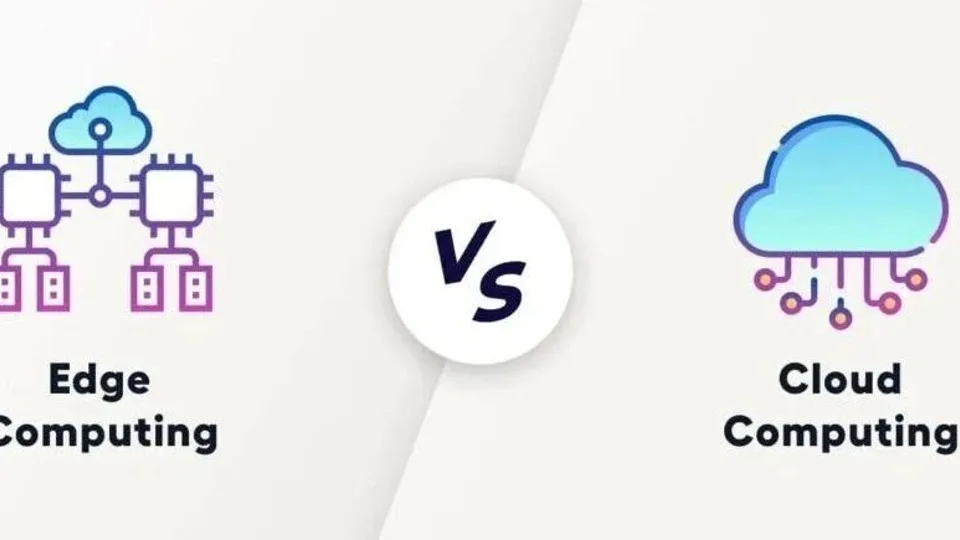
Cloud computing centralizes resources in large data centers, while edge computing processes data near its source, offering lower latency and better suitability for IoT; this article compares their definitions, characteristics, advantages, and real‑world applications, highlighting how they can complement each other.
The article introduces LightPool, an open‑source cloud‑native storage‑pool architecture built on NVMe‑over‑Fabric that delivers high performance, low cost, and high availability for large‑scale distributed databases, and explains its design, scheduling, storage engine, and hot‑upgrade/migration capabilities presented at the 30th IEEE HPCA conference.
The article explains that platform engineering extends far beyond basic infrastructure, highlighting its core pillars such as automation, composability, agility, observability, and the essential role of collaboration and culture in creating value‑driven, cloud‑native software delivery.
This guide explains how to use QEMU on an x86 host to pull an ARM base image, create a Dockerfile with QEMU support, build the ARM-compatible Docker image, and test it, including a practical example of packaging a simple Python app for Raspberry Pi.
This article describes how 360 unified Kubernetes pod networking with OpenStack VPC by developing a custom CNI plugin that leverages Neutron elastic ports, IPVLAN L2 mode, and OVS to achieve layer‑2 connectivity between VMs and pods, including detailed implementation steps and command examples.
After four years running infrastructure at a fast‑growing startup, the author reviews almost every major decision—from choosing AWS over GCP and adopting EKS, RDS, and Redis, to automating post‑mortems with Slack bots, standardising IaC with Terraform and GitOps, and evaluating SaaS tools like DataDog, PagerDuty, and Notion—highlighting the benefits, regrets, and practical lessons learned.
This guide shows how to quickly and cheaply deploy the open‑source Google Gemma large language model on Alibaba Cloud Function Compute GPU using the new idle‑billing mode, covering prerequisites, Docker image creation, function setup, idle reservation, testing, monitoring, and cost estimation.
This article compares the advantages and disadvantages of cloud storage, on‑premises storage, and the hybrid cloud‑near storage model, explaining how each impacts scalability, cost, control, security, and integration for modern data platforms, and helps organizations select the most suitable solution.