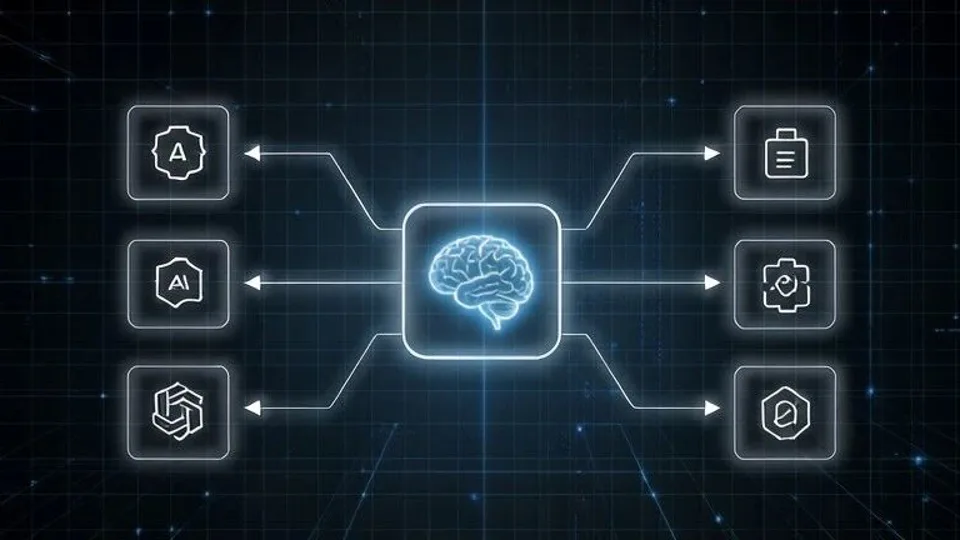
The article introduces product-os, a reusable 5-step workflow (intake, triage, clarify, compose, check) that replaces ad-hoc prompt writing with fixed playbooks and templates, unifying entry/exit, routing via rules (organize/rebuild/iterate), and versioning changes/iterations/optimizations, demonstrated via a real questionnaire case study.
The article introduces the iceberg model from systems thinking—events, patterns, structure, and mental models—and applies it to a case where two technology teams fight for control instead of collaborating, tracing the conflict to hiring practices that prioritize technical puzzles over collaborative learning and deep-seated beliefs that equate coding trivia with engineering competence.
The article demonstrates that while AI coding agents can produce functional order-API code in seconds, shipping reliable software still demands deep engineering judgment — around business rules, edge cases, consistency, concurrency, and operational constraints — that AI amplifies but cannot replace.
Using a customer service shift-change scenario, the article shows that AI-generated summaries fail to preserve the actionable context — valid decisions, permissions, execution status — needed for seamless handoffs, causing work to restart; it argues organizations must link summaries to source records, maintain permissions, and ensure accountability so incoming staff can continue rather than re-verify everything.
This article explains why AI project ROI calculations often fail, proposing a framework that separates value into process efficiency, knowledge enhancement, and product innovation, distinguishes realized cash benefits from released capacity and future opportunities, requires comparable baselines covering failures, includes full lifecycle costs, and uses a value evidence card for continuous re-evaluation.
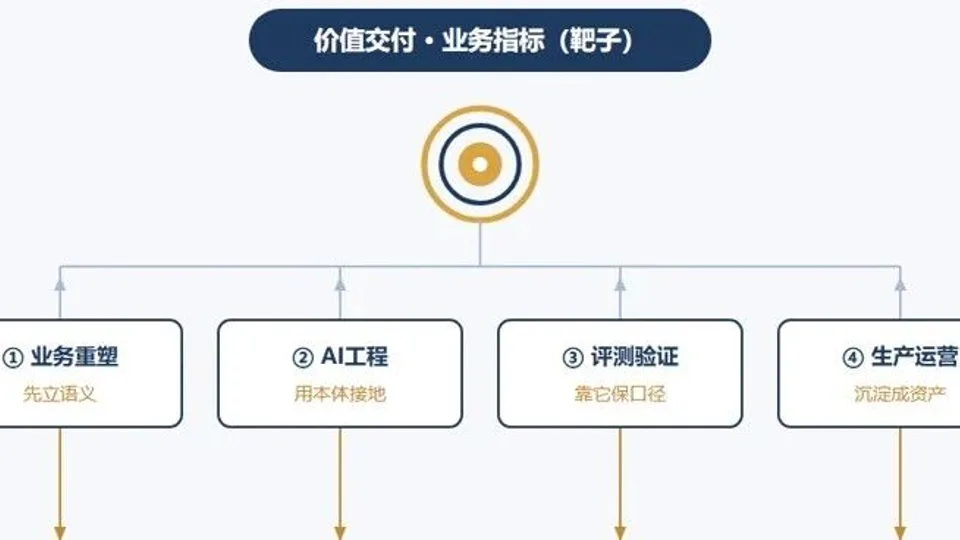
The article details the FDE four-ring methodology—business reshaping, AI engineering, evaluation & verification, and production operations—emphasizing they form an integrated network, not sequential stages, with ontology modeling as the semantic foundation, and highlights pitfalls, deliverables, and the need for co-creation and agile iteration.
This article introduces AI-Native SDLC, explaining why code generation is no longer the bottleneck in software development and how the bottleneck has shifted to requirements specification, context management, verification, governance, and production feedback loops, outlining a 7-layer architecture, artifact-driven workflow, and a 9-part series roadmap.
The article describes how 15 specialized agents organized via AgentCore collaborate across the full software delivery lifecycle, while AgentLoop continuously improves the team by analyzing execution traces, enabling offline benchmarking against expert commits and online experience accumulation, reducing delivery cycle from a month to a week in a constrained scenario.
This article distinguishes production readiness gates from value validation metrics in AI agent deployments, detailing four hard gates (quality, security, operations, governance), a six-dimensional metrics framework with seven required fields per metric, attribution boundaries for business results, and decision triggers (continue, expand, contract, exit) to avoid false success signals.
This article analyzes why test data generation teams must transform from reactive data providers to proactive quality enablers, detailing a four-step framework covering strategic alignment, layered architecture, new engineering roles, and value-loop metrics, while highlighting cultural, tooling, and measurement pitfalls.
Alibaba Cloud's CTO line shares early findings from AI-native R&D transformation, revealing a three-stage evolution from tool-native to org-native, local efficiency gains like 2hrs→5mins and 40days→2days release cycles, three platform-level needs, and seven production pilots, while acknowledging unresolved challenges in human-AI collaboration, responsibility boundaries, and cross-team reuse.
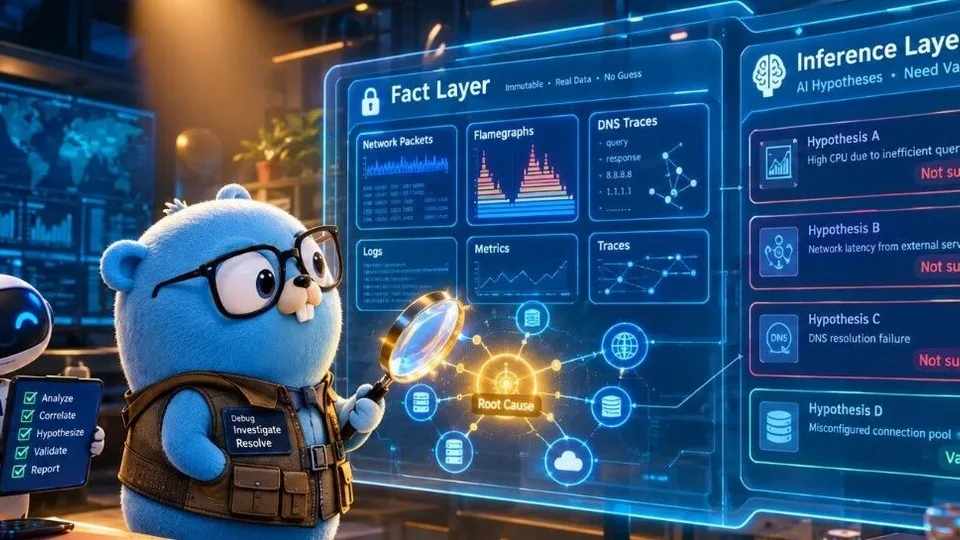
The article presents a debugging methodology for AI-generated code based on three production incidents, advocating a constraint-satisfaction approach where agents collect immutable facts before forming hypotheses, use control comparisons to isolate strong signals, and verify against all evidence to avoid hallucinated fixes.
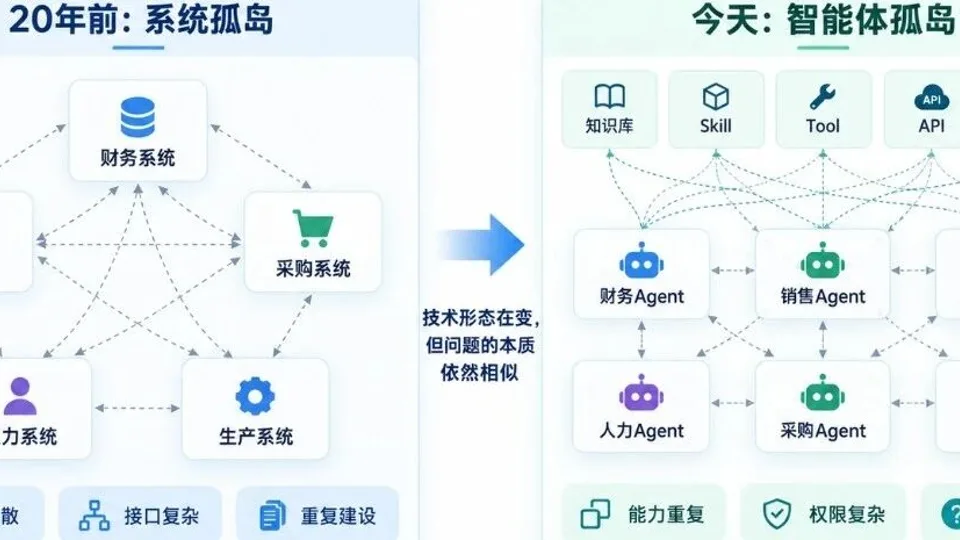
Enterprises are rapidly deploying AI agents per department, mirroring the system-silo chaos of 20 years ago; McKinsey and Gartner warn of uncontrolled agent proliferation, predicting 150,000 agents per Fortune 500 firm by 2028, and prescribe six governance steps plus a three-pillar relationship framework to align agents with business, capabilities, and accountability.
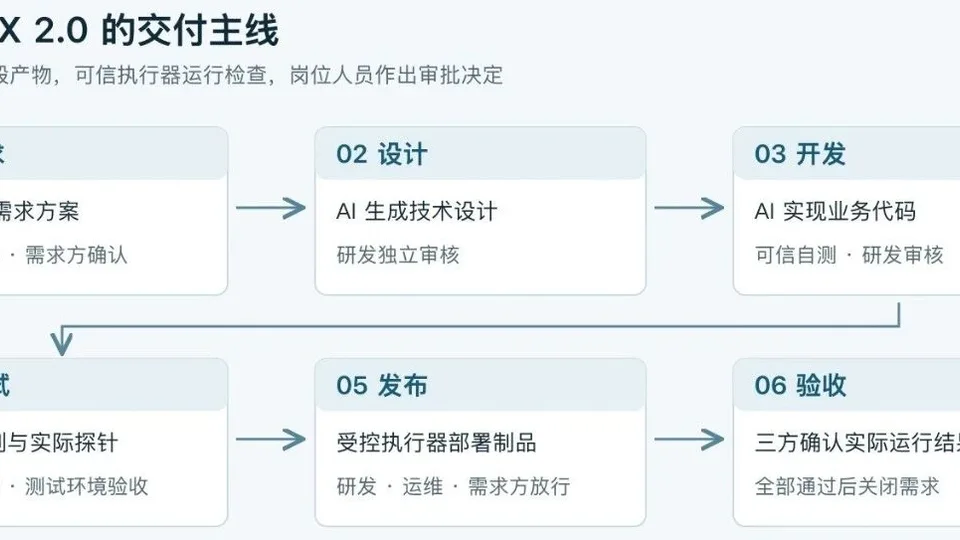
ForgeX 2.0 demonstrates a verifiable AI-driven software delivery loop using real Codex agents, covering requirements, design, development, testing, approval, deployment, and fault recovery with SQLite persistence, signed artifacts, and 11 independent AI sessions validated on macOS.
The article advocates starting enterprise ontology with a verifiable business capability like supplier qualification checks, defining object identity, scope, shared definitions, and maintenance responsibilities upfront, then using a second scenario to test reuse boundaries while tracking dependencies for future changes.
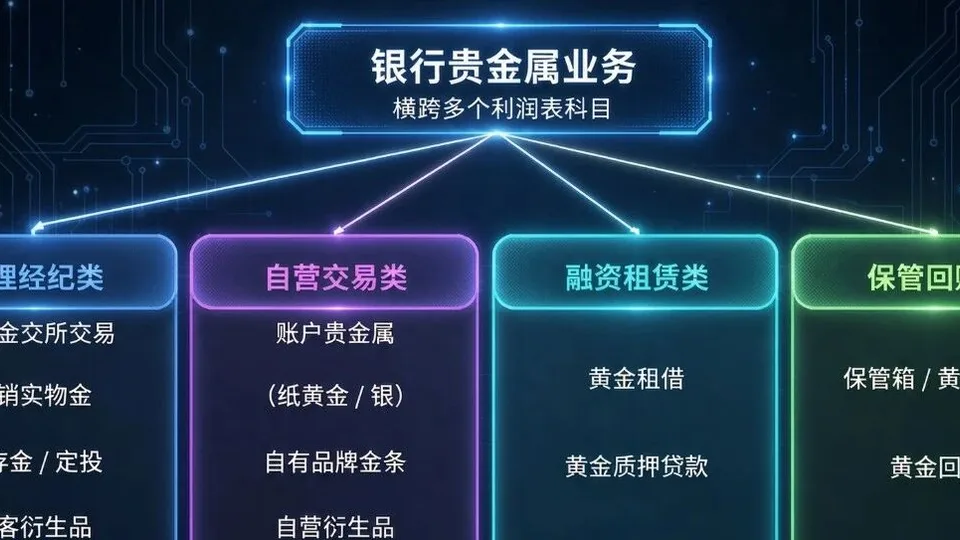
The article maps the official five-category classification of agency precious metals business against actual product lines at ICBC, China Merchants Bank, and Minsheng Bank, reveals that account precious metals (paper gold) have been phased out since 2021 due to regulatory reclassification as derivatives and the 'Oil Treasure' fallout, and contrasts paper gold with the now-favored accumulation gold across eight dimensions including leverage, physical delivery, and target users.
This article critiques AI-driven self-healing tests for masking real defects and bypassing new business logic, proposing a four-step isolation observation framework—classify failures, attempt temporary recovery, track failure clusters through a state machine, and precipitate reusable knowledge—to make failures explainable, controllable, and accumulative rather than chasing zero failures.
The article evaluates whether using coding agents to write docs, Jira tasks, MR descriptions, and Skills constitutes real knowledge accumulation, proposing four criteria — findable, trustworthy, usable, updatable — and a workflow linking task evidence, ADRs, runbooks, tests, and Skills with continuous validation.
This article argues that enterprise AI requires six distinct responsibility types—strategic, business value, employee change, platform, risk, and operations—each with a single accountable owner, and provides a decision matrix with escalation paths to replace vague RACI charts and ensure AI delivers sustained business value.
The article distinguishes between cost cutting (reducing bills) and cost avoidance (slowing bill growth relative to business), explains why line-level optimizations rarely affect financial statements, and argues that real 30% savings come from platform-level levers like oversubscription ratios, depreciation policies, and billing strategies, requiring centralized management and end-to-end efficiency metrics.