This article explains CDN fundamentals, its DNS‑based routing and caching mechanisms, how back‑origin works, when CDN accelerates content delivery, the costs involved, and scenarios where using a CDN may not bring performance benefits.
This article summarizes Li Yu's presentation on Alibaba Cloud EMR's deep collaboration with the StarRocks community, detailing major contributions across versions, the serverless StarRocks product’s core capabilities, and future plans to enhance OLAP‑lakehouse integration, performance, and cloud‑native elasticity.
The article analyzes the evolution of cloud computing and the challenges of migrating applications from X86 to ARM architectures, covering cross‑architecture adaptation, virtualization, containerization, cloud‑native practices, language‑specific impacts, and a real‑world case study of the BlueMail platform.
This article recounts a conference presentation on using edge containers to enhance global audio‑video services, detailing the challenges of edge deployment, the cloud‑native architecture adopted, specific Kubernetes extensions, scaling strategies, cost optimizations, and future directions for edge computing.
This tutorial introduces Spring Cloud Function, explains its core concepts and benefits for serverless development, and walks through a complete example—including configuration, code snippets, HTTP endpoints, function composition, custom routing, and deployment—so readers can quickly build and test function‑based applications.
X (formerly Twitter) cut monthly cloud spending by 60% by shifting workloads and storage to on‑premises infrastructure, igniting a debate over whether de‑clouding is viable for all enterprises, how it signals a potential inflection point in cloud computing, and what strategies—balancing high availability, disaster recovery, and cost efficiency—should guide firms, as highlighted in the upcoming TVP Tech Sleepless Nights series featuring leading industry experts.
This guide walks you through selecting a cloud server, configuring DNS, SSL, and system images, connecting via SSH or VNC, installing and configuring Nginx, uploading your site files, and using the Baota control panel to manage a Linux‑based web server, while addressing common pitfalls.
The case study details how the Cloud Editing team tackled severe waveform loading delays, zoom lag, and inefficient IndexedDB storage by refactoring the processing pipeline, standardizing multi‑transaction storage, adding monitoring and cleanup tools, and rigorously testing releases, ultimately cutting processing times by over half and dramatically improving user experience.
In November 2023, Alibaba Cloud suffered a massive outage that disrupted client, web, and mobile access for nearly eight hours, affecting a wide range of Alibaba products, over 300,000 enterprise customers, and numerous global data centers, highlighting the fragility of large-scale cloud services.
This guide explains how to create an Azure Service Principal with the Azure CLI, extract its credentials using jq, and log in to Azure non‑interactively via the CLI, covering required parameters, role selection, and verification commands.
This article explains what SaaS is, outlines its business value, and walks through the full technical stack—from entry points and access layer to business, data, and operations layers—while comparing shared, dedicated, and hybrid deployment models and future challenges.
On November 12, Alibaba Cloud suffered a global-scale failure that disrupted dozens of Alibaba‑affiliated apps—including Taobao, DingTalk, and Aliyun Drive—affecting services from e‑commerce to campus laundry, prompting widespread frustration and sparking discussions about cloud reliability and potential migration to other providers.
In a detailed interview at the 2023 Wuzhen Internet Forum, Alibaba Cloud’s infrastructure lead Cai Dezhong outlines the three‑phase IPv6 rollout, highlights organizational and technical innovations, stresses the need for global cooperation, and explains how IPv6 underpins the next generation AI infrastructure and predictable high‑performance networking.
This article introduces OpenStack’s core components, outlines its strengths and weaknesses, and provides step‑by‑step code examples for achieving traffic mirroring and cross‑host forwarding using Kubernetes, Istio, and OpenStack networking plugins such as Neutron and Calico.
Anson from Tencent Cloud describes how the 微搭 low‑code platform uses a hybrid‑cloud architecture that separates public‑cloud design from private‑cloud deployment, employing a split‑able micro‑service design that can be merged into a single pod, cutting resource usage by up to 90 % and eliminating version‑related O&M issues.
The article examines how Apollo’s long‑polling and push‑pull design cause massive database bandwidth spikes during large namespace updates in promotion periods, analyzes the RemoteConfigLongPollService and repository code, and proposes three optimizations—key‑level synchronization, MD5‑based change detection, and circuit‑breaker handling—while weighing real‑time versus periodic update trade‑offs.
At the 2023 vivo Developer Conference, eight internet‑technology experts presented their latest practices, showcasing a microservice platform serving over 500 million users with tens of thousands of services, a dual‑active stream‑batch big‑data architecture, a mixed‑deployment container scheduler, the low‑code Wukong system, and advanced short‑video optimizations that cut latency and playback costs.
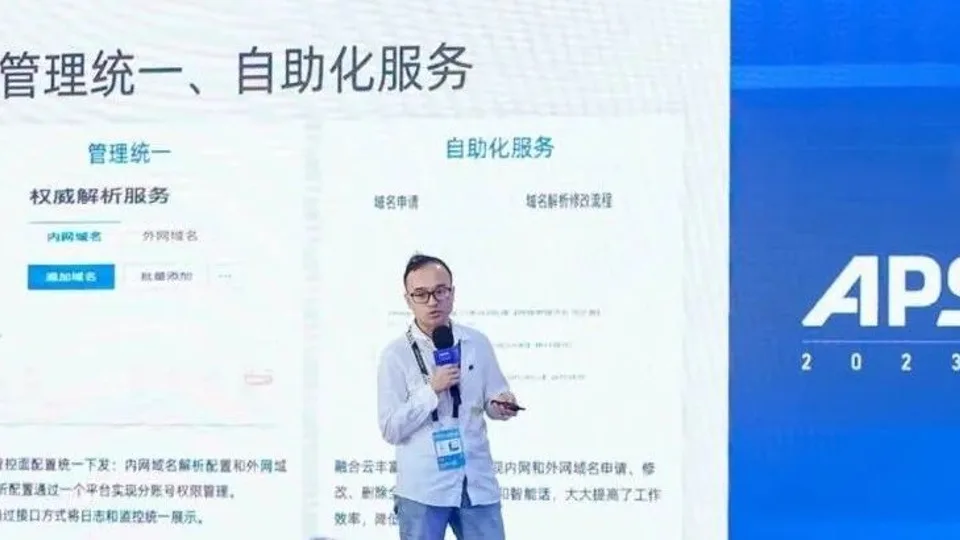
At the Yunqi Conference on October 31, Alibaba Cloud’s DNS team unveiled major upgrades to its cloud DNS product, detailing a unified “one platform, two ends” architecture, multi‑cloud integration, enhanced reliability, security, and ecosystem initiatives, with case studies from Geely, China Communications, and others.
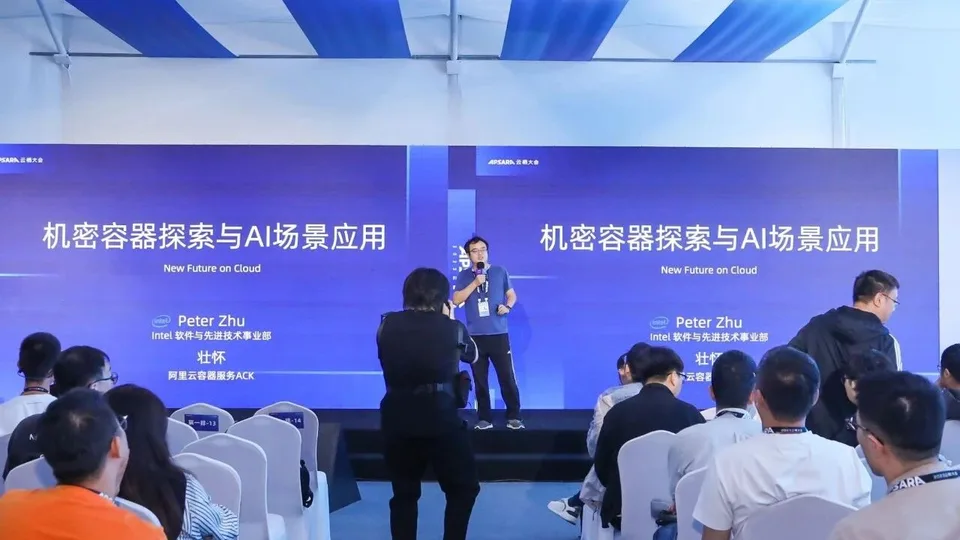
This article explains the architecture and practical steps for deploying confidential containers using Intel TDX and Alibaba Cloud ACK, detailing threat models, security features, remote attestation, and AI workload protection while maintaining performance and cost efficiency.