This article provides detailed solutions and explanations for 12 computer science practice problems covering CPU execution time calculation, bus bandwidth, virtual memory paging, subnet addressing, database normalization (2NF/3NF), lossless join decomposition, UML class diagram notation, Kubernetes probe types, earned value management, deadlock prevention strategies, and common architectural misconceptions.
This article demystifies Java's happens-before rules, showing why temporal order doesn't guarantee visibility, and how volatile combined with program order ensures a non-volatile variable's visibility across threads through a concrete code example.
This tutorial demonstrates how to build a self-growing personal knowledge base using WorkBuddy and Obsidian, featuring a three-layer directory structure (raw, wiki, output), AI-driven incremental merging with source tracing, and a verification checklist to ensure knowledge fusion over mere accumulation.
This article explains why computers generate heat, details CPU temperature thresholds and throttling behavior, compares air and liquid cooler types, covers case airflow design including positive and negative pressure, addresses laptop cooling challenges, and provides actionable maintenance steps like dust cleaning, thermal paste replacement, and airflow improvements.
The article explains why integrating a national anti-fraud center into the Linux kernel violates core OS principles: kernels must remain neutral, minimal, and secure; adding application-specific logic with kernel-level privileges breaks least privilege, introduces instability, and undermines the open-source consensus that keeps Linux universal.
This tutorial explores 20 practical ls command options for Linux, covering long listing, human-readable sizes, sorting by size or time, showing hidden files, inode numbers, recursive listing, and version information, with clear examples for each flag.
This article dissects NVIDIA's Pascal architecture via the Tesla P100, detailing its 16nm process, HBM2 memory delivering 732 GB/s bandwidth, FP16 support via FP32 units achieving 21.2 TFLOPS, and NVLink 1.0 providing 160 GB/s GPU interconnect bandwidth, with comparative calculations across GPU generations.
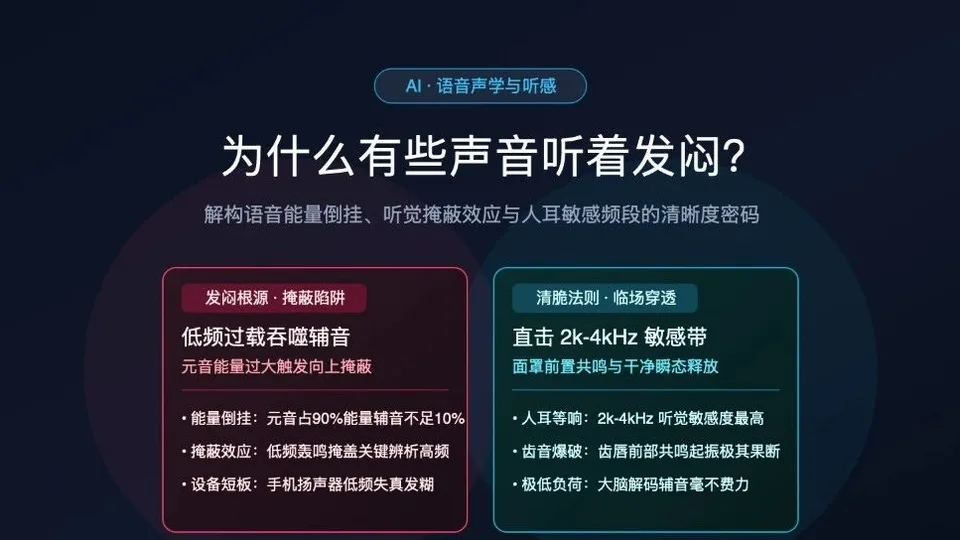
This article explains why some voices sound muffled despite high volume, revealing the 90/10 acoustic energy paradox where vowels carry loudness but consonants carry meaning, how cochlear upward masking buries consonants, and provides a practical 4-step EQ filter chain plus TTS voice selection criteria for crystal-clear speech.
This guide explains how to select a computer power supply by covering wattage calculation, 80 PLUS efficiency ratings, modular cable designs, connector types, form factors, and brand selection criteria to ensure stable hardware operation.
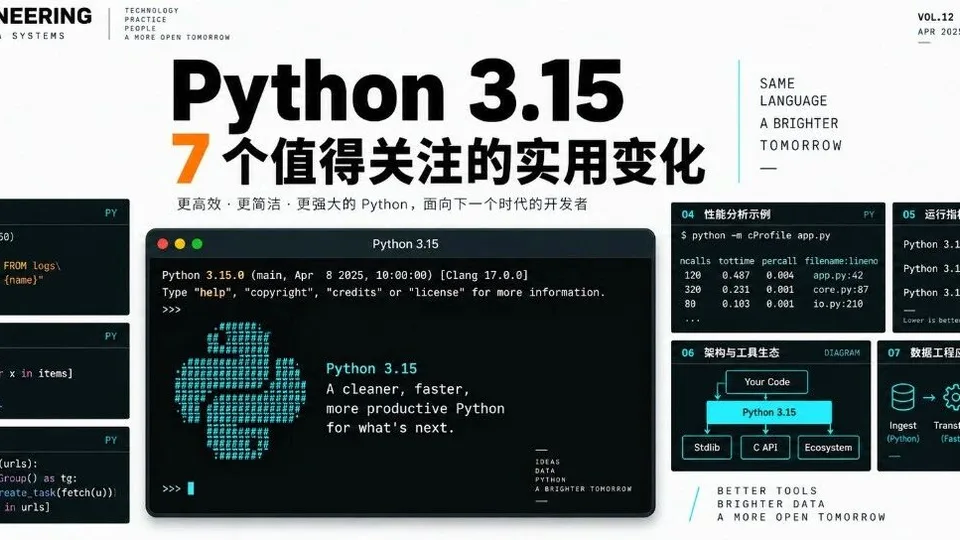
This article explores Python 3.15's seven most practical features — including lazy imports, frozendict, sentinel values, comprehension unpacking, UTF-8 defaults, sampling profiler, and JIT — with code examples, trade-offs, and a recommended testing workflow using uv for isolated environments.
The article defines engineering's five core elements and argues software engineering remains immature due to missing knowledge codification mechanisms, reliance on original design over routine design, and lack of quantitative architectural models, despite progress in abstraction layers and tools.
Diagram Design is a Claude Code Skill that generates 39 types of publication-ready technical diagrams—architecture, sequence, ER, flowcharts, mind maps—from natural language prompts, outputting self-contained HTML files with consistent styling, and supports importing draw.io and Mermaid diagrams for migration.
Quartex Pascal releases a new compiler with Delphi-compatible generics, full RTTI, binary records for low-level memory access, near-doubled compilation speed, and self-hosting capability, demonstrated by porting the Reticulum network protocol from C to Object Pascal.
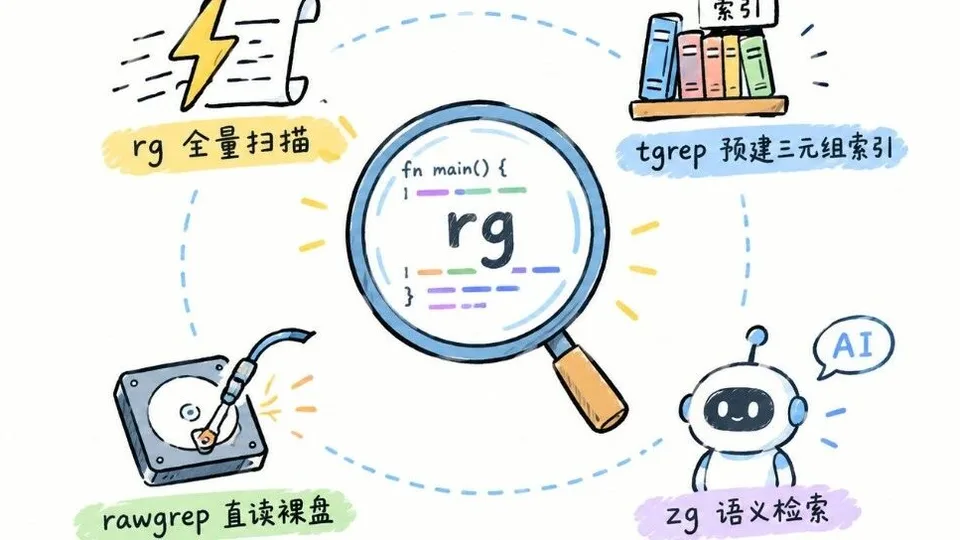
This article compares four code search tools—ripgrep, tgrep, rawgrep, and zg—analyzing their distinct technical approaches: full-scan SIMD regex, trigram indexing, raw disk access, and semantic vector search, with benchmarks and guidance for choosing based on repository size, frequency, and AI agent integration.
This article explains graphics card fundamentals, covering GPU architecture differences from CPUs, key components like VRAM and cooling, integrated vs discrete GPUs, the five-step rendering pipeline, frame rate targets, resolution impact, ray tracing technology, and non-gaming uses such as video editing and AI training.
This article analyzes LeetCode 761 Special Binary String, proving that valid strings decompose into minimal '1...0' units, then achieves maximum lexicographical order through recursive substring sorting and a custom comparator proven to satisfy total order properties (completeness, antisymmetry, transitivity), with Java, C++, and TypeScript implementations.
This article distinguishes four types of low energy—sleepiness, physical fatigue, attention depletion, and low motivation—arguing that effective energy management requires matching high-value tasks to personal peak periods through self-measurement, prioritizing sleep and exercise, minimizing task-switching costs, and ruling out medical causes before optimizing schedules.
This article defines software architectural styles through components, connectors, constraints, and computational models, detailing six classic styles—Pipe-and-Filter, Object-Oriented, Event-Driven, Layered, Repository, and Interpreter—with their invariants, examples, advantages, disadvantages, and specializations, plus heterogeneous architecture combinations.
This article explains the motherboard's role as the central circuit board connecting all computer components, detailing key parts like CPU sockets, memory slots, chipsets, PCIe and M.2 interfaces, form factors (ATX, mATX, ITX), bus communication, and selection criteria for compatibility and performance.