This article explores how JD.Vision, one of the first native apps on Apple Vision Pro, uses spatial computing, custom gestures, shaders, and performance optimizations to deliver a 3D immersive shopping experience that lets users place and interact with virtual products in their real environment.
StarWish Forest, DeWu’s first growth‑based interactive game, lets users nurture virtual trees by collecting water droplets through daily check‑ins, team planting, PK battles and e‑commerce tasks, automatically advancing through fifteen levels and earning rewards, while its Redis‑driven architecture and modular design enable scalable social engagement and commercial conversion.
This tutorial shows how front‑end developers can use the Dora SSR game engine’s TSX support to create a simple Angry‑Birds‑like game in fewer than 100 lines of code, covering scene setup, physics, UI components, touch controls, scoring logic, and cross‑platform deployment.
The article recounts the history of the 1969 text‑based Lunar Lander game, explains how its creator used the rocket equation and Taylor series for physics simulation, and reveals a long‑standing bug—a missing factor in the square‑root denominator—that causes the optimal fuel‑burn strategy to fail, prompting a modern analysis of the error.
The article shows front‑end developers how to build a simple “Angry Birds” style game with the Dora SSR engine—using TSX, TypeScript, and React‑like components—by setting up the environment, creating scenes, handling physics and input, and leveraging its Lua/WASM backend.
The article explains how to use FreeType to load and render font glyphs into bitmaps, upload those bitmaps as OpenGL textures, render them with texture coordinates, and employ a bitmap cache and fixed‑size texture atlas to efficiently manage and reuse character images in a fast double‑buffered text rendering pipeline.
The article discusses a top architect's interview with a game company about microservice adoption, explains why real‑time performance and stateful requirements often make microservices unsuitable for game servers, and presents multiple expert opinions highlighting latency, network overhead, and team size considerations.
This article explains the mathematical basis and step‑by‑step implementation of an automatic missile tracking algorithm for shooting games, using Python’s pygame library, covering differential‑equation‑derived motion, angle calculations, image rotation handling, and complete source code.
When large‑scale A/B testing is impractical for high‑traffic, socially intensive games, developers can rely on methods such as Difference‑in‑Differences, hypothesis proportion analysis, and differential‑ratio comparison to infer the causal impact of content updates on key performance metrics.
This guide walks you through creating a realistic 3D AI digital human using Unreal Engine's free Metahuman system and other zero‑cost tools, covering model selection, facial and body adjustments, clothing, export, and tips for both realistic and stylized characters.
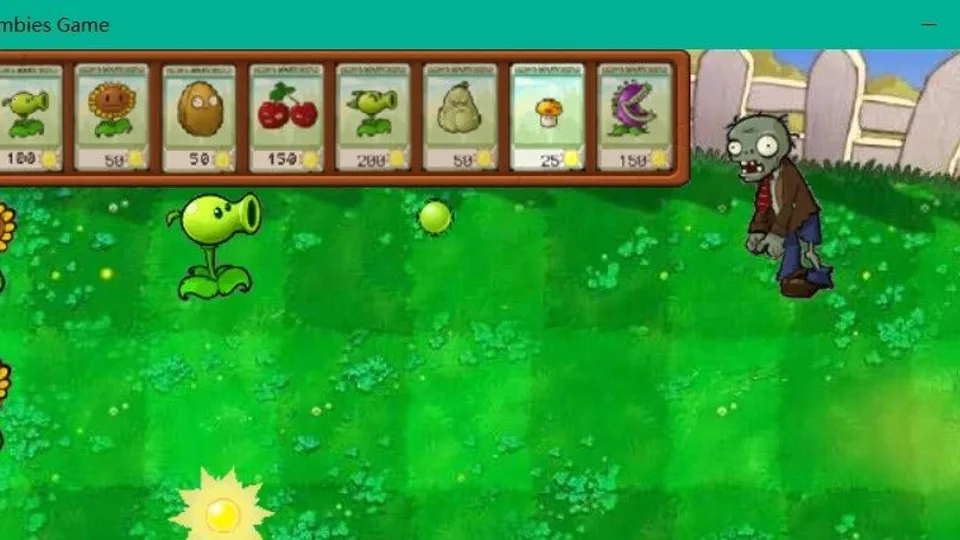
This article presents a detailed walkthrough of the Python implementation of a Plant vs Zombies style game, covering the state management architecture, key constants, and main execution flow, while providing complete source code snippets for each module.
This article walks through creating a Go‑based desktop pet that follows the mouse, reacts to clicks with sounds and visual changes, and runs transparently using the Ebiten game engine, complete with code snippets, configuration options, and launch instructions.
This article explains the concept of game compatibility, outlines typical hardware and UI compatibility problems on mobile devices, and details a comprehensive testing workflow—including preparation, test case design, environment setup, execution, reporting, and issue tracking—to help developers ensure stable, consistent gameplay across diverse platforms.
This article demonstrates how to create a Python program that simulates the Chinese card game Zha Jin Hua, covering deck preparation, player handling, card dealing, hand evaluation, scoring rules, and statistical analysis of game outcomes, with complete source code and example results.
This article details the real‑time rendering techniques, material choices, lighting, shadow, ShaderGraph effects, post‑processing bloom, dissolve, map‑freeze, particle and geometry trails, as well as displacement and bump mapping used in the SAR Creator platform for Douyin's 2024 Spring Festival interactive experiences.
This article provides a comprehensive technical overview of SAR Creator, a TypeScript‑based high‑performance interactive solution used by ByteDance, covering its workflow, key features such as canvas adaptation, 2D/3D mixing, bundle splitting, image grading, compression, configuration files, scripting lifecycle, prefab handling, dynamic loading, and future development plans.
This step‑by‑step tutorial shows how to create a browser‑based plane‑shooting game by setting up a Vue3 project, installing Phaser, organizing assets, implementing collision detection, designing preloader, main, and end scenes, encapsulating player, bullet, enemy, and explosion logic in reusable classes, and optimizing collision bounds for a polished HTML5 gaming experience.
The article presents MaxSDK, a unified C# SDK for Unity that abstracts platform‑specific native SDKs across Android, iOS, Windows, macOS and future platforms, offering a singleton interface, abstract base classes, data models, and callback listeners to dramatically cut integration effort, maintenance cost, and enable easy extension to other engines.
The article analyses the indie puzzle game COCOON, explaining how its designers use implicit visual, auditory, and world‑nesting cues—while preserving 50% of previous mechanics—to guide players subtly, maintain a comfortable learning curve, and earn multiple industry awards.
This article shares seven practical insights gained from client performance testing and optimization in a mobile basketball game, covering long‑term performance planning, data‑driven decisions, feature toggles, build configurations, realistic testing, careful trade‑off evaluation, and the importance of team communication.