This guide explains how to implement a custom TCP protocol in PHP using Workerman for Unity3D multiplayer games, covering the sticky‑packet problem, protocol interface methods, two concrete protocol examples, and step‑by‑step testing of packet framing and splitting.
Although microservices are popular for many applications, this article explains why game servers often avoid them, citing real‑time latency requirements, stateful processing, high network overhead, and the difficulty of maintaining fast, low‑latency communication, while also interspersing promotional content for ChatGPT services.
The article examines the launch of the Chinese 3A title "Black Myth: Wukong", analyzes programmers' challenges in high‑cost game development, presents survey data on AI coding tools, introduces Tencent Cloud AI Code Assistant, and provides a step‑by‑step tutorial for integrating the assistant into Unreal Engine projects using Rider.
The article examines the technology behind the Chinese AAA title “Black Myth: Wukong”, revealing its use of Unreal Engine 5 with C++ as the core language, additional JavaScript integration via Unreal.js, and discusses community speculation about tools like PuerTS while also containing promotional material for development tools.
The article presents a detailed overview of the average monthly salary of Shenzhen Youke Interactive Technology Co., the developer of "Black Myth: Wukong," and breaks down reported compensation for technical, design, operations, and HR positions, supplemented by visual data and current job openings.
An extensive GPU benchmark of the Unreal Engine‑powered game Black Myth: Wukong evaluates performance across 41 graphics cards, multiple resolutions, and ray‑tracing settings, revealing which GPUs deliver playable frame rates with and without DLSS/FSR/TSR and frame‑generation technologies.
This article explores how the growing demand for visual realism drives the adoption of physically based rendering, rigid‑body dynamics, cloth and fluid simulations, and emerging AI techniques to create more believable character animation in modern computer graphics and games.
The article examines how the Chinese AAA title “Black Myth: Wukong” leverages Unreal Engine 5, C++, Blueprint visual scripting, and even a custom C#‑based USharp plugin to deliver cutting‑edge graphics, physics, AI, and culturally rich gameplay, illustrating the convergence of advanced technology and Chinese heritage in modern game development.
This article compares Java backend development with game engine programming, explains why Unreal Engine (C++) and Unity (C#) dominate modern games, outlines official Unreal learning paths, and introduces hot‑update techniques using Blueprints, USharp and Lua for dynamic game updates.
This article explains how to create a Python script that automatically compensates weapon recoil in PUBG by capturing the screen, recognizing equipment with OpenCV and SSIM, and moving the mouse via pynput and pydirectinput without modifying the game memory.
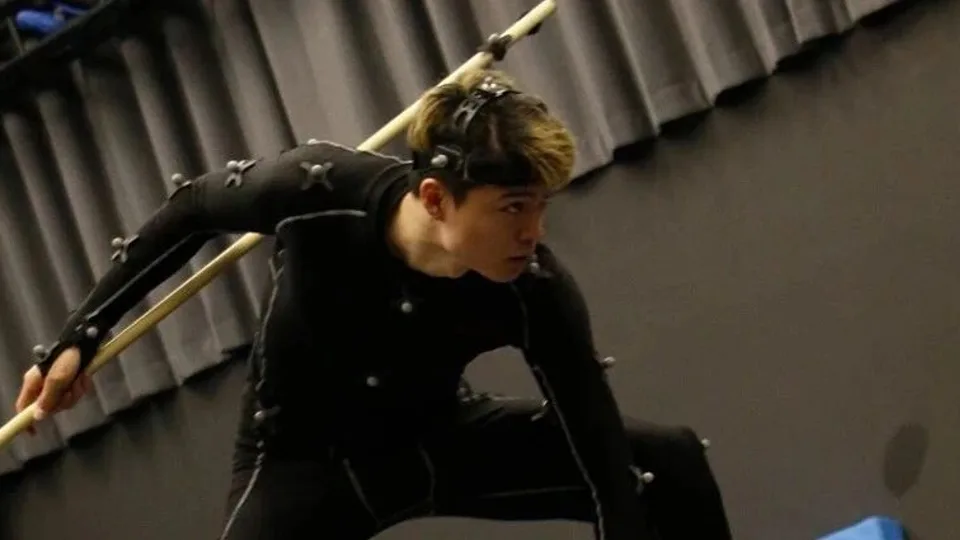
The article explores how Black Myth: Wukong achieved its breathtaking combat and realistic character movements through extensive motion‑capture technology, featuring actor Yin Kai’s background, the 360° camera setup, and the meticulous process of translating physical performance into virtual data for the game.
This guide shows how to install and run the Chinese AAA title Black Myth: Wukong on deepin 23, covering NVIDIA driver fixes, Steam installation, Proton configuration, system requirements, download methods, and performance screenshots.
This article reviews the evolution of hot‑update methods in games, critiques Lua, PuerTS, and HybridCLR, and proposes a minimalist Unity solution that combines AssetBundle resource updates with runtime DLL loading via reflection, demonstrating a simple, low‑dependency architecture validated on Android VR projects.
This tutorial walks you through building a fully functional Pong game in Python using the turtle library, featuring an AI paddle that automatically tracks the ball, complete with step‑by‑step code snippets and a complete source listing for easy copy‑paste implementation.
This article demonstrates how to build a colorful, music‑synchronized fireworks animation in Python using the Pygame library, covering module imports, window setup, color definitions, the Fireworks class implementation, and the main loop that renders and animates the fireworks effect.
This article shares practical insights on how QA engineers in game development can adopt project‑management thinking across the five classic project phases—initiation, planning, execution, monitoring & controlling, and closing—to improve testing efficiency, risk management, and overall product quality.
This article explains how to use Python to build a Zha Jin Hua card‑game simulator, covering the game rules, hand‑type definitions, scoring logic, player management, statistical analysis of 100 000 rounds, and provides the complete source code with detailed comments.
This tutorial walks through creating a complete first‑person shooter in the browser using Three.js, covering scene setup, floor and lighting, random moving targets, player controls, shooting mechanics, bullet physics, hit detection, explosion effects, and the main animation loop.
This article walks through creating a tank‑battle game in Go using the Ebiten engine, covering repository setup, required tools, code organization, the core Update and Draw loops, and the mathematical formulas—rotation matrix, cross product, dot product, and the separating axis theorem—used for collision detection.
The article walks through building a 2D chicken game, contrasting a costly ray‑casting pathfinder with an optimal A* grid‑based solution, detailing node classes, heuristics, and JavaScript code, while also covering parallax scrolling, bottom‑Y depth sorting, a unified timer system, and a dual Phaser‑Rax rendering architecture.