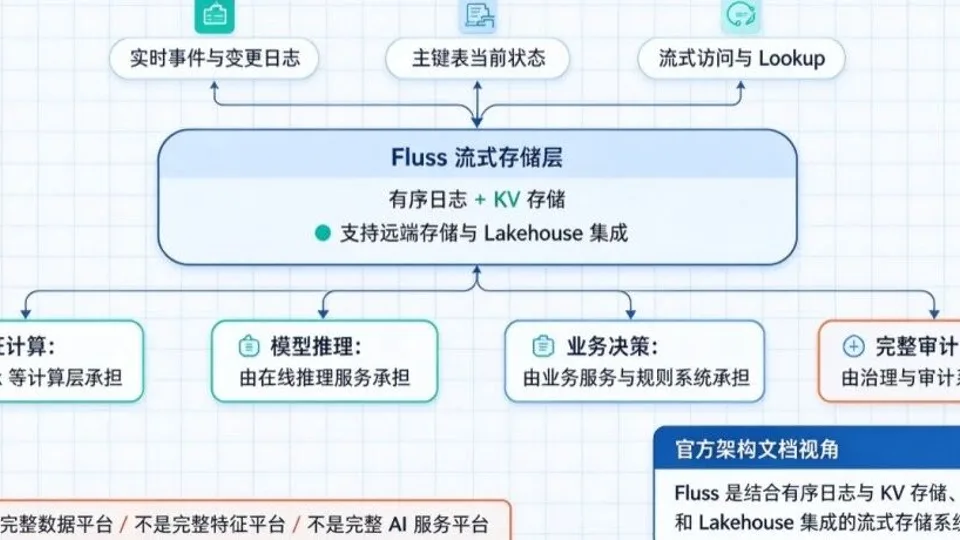
This article analyzes Apache Fluss as a real-time data storage layer for AI workloads, detailing its primary key tables for current state and changelogs, Delta Join for reducing Flink state redundancy, TTL and tiering for lifecycle management, and clarifies that Fluss provides storage foundation but training-serving consistency requires additional pipeline governance.
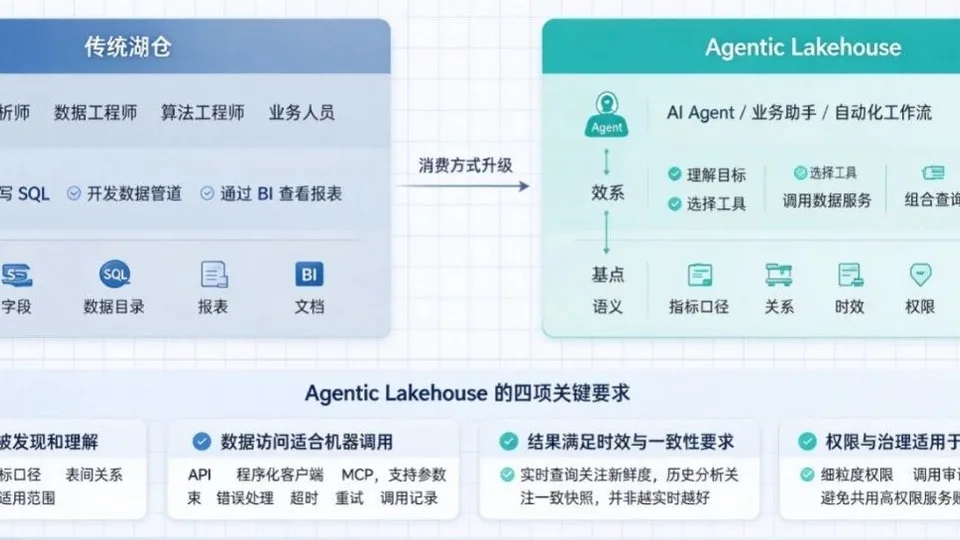
This article explores how lakehouse architecture must evolve to serve AI agents as first-class users, covering a four-layer reference architecture, Apache Fluss 1.0 capabilities for real-time and historical data access, secure query and write-back patterns, and practical troubleshooting for production deployments.
This article provides a comprehensive technical deep dive into Ray Data, covering its architecture, streaming execution model, shuffle implementation, fault tolerance, performance tuning, and best practices for AI data pipelines, positioning it as a superior alternative to Spark for GPU-intensive workloads.
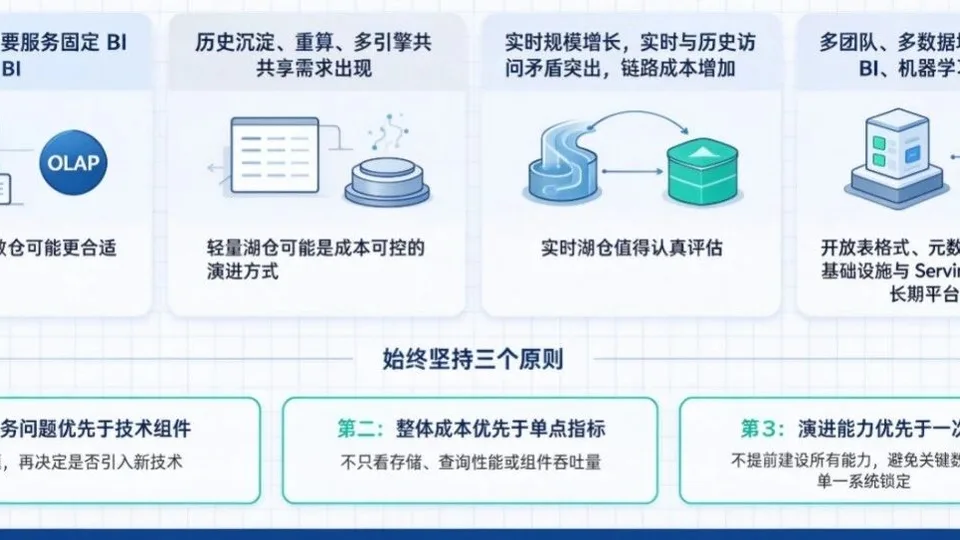
The article provides a decision framework for enterprises evaluating Lakehouse adoption, arguing architecture should evolve with business complexity rather than follow trends. It defines six evaluation dimensions, contrasts Lakehouse with traditional OLAP, outlines phased evolution from basic analytics to streaming Lakehouse and AI data infrastructure, and warns against five common over-engineering pitfalls.
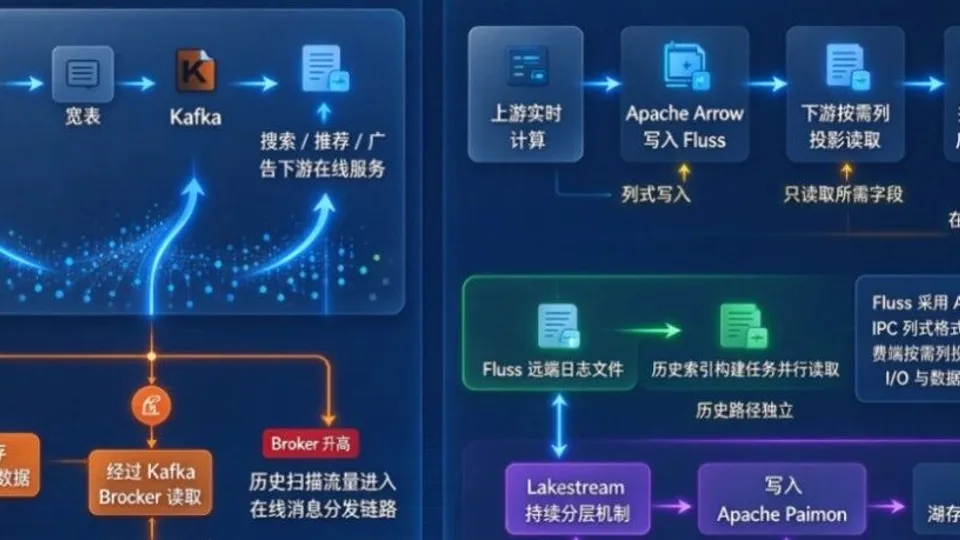
This article details Xiaohongshu's migration of its core real-time indexing pipeline from Kafka to Apache Fluss, covering architectural drivers like read amplification and historical replay contention, Fluss's columnar storage and Lakestream integration with Paimon, and a phased migration approach including baseline testing, shadow dual-run, and gradual cutover.
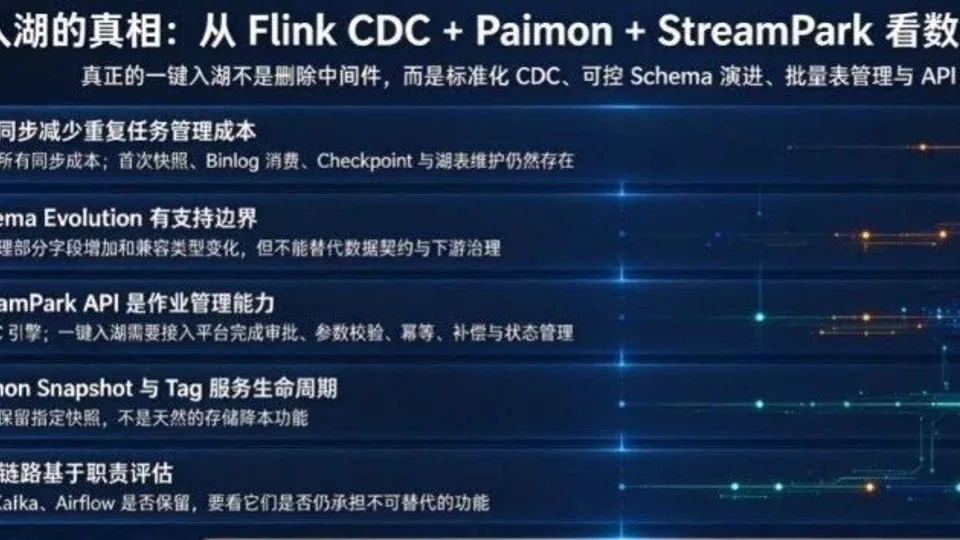
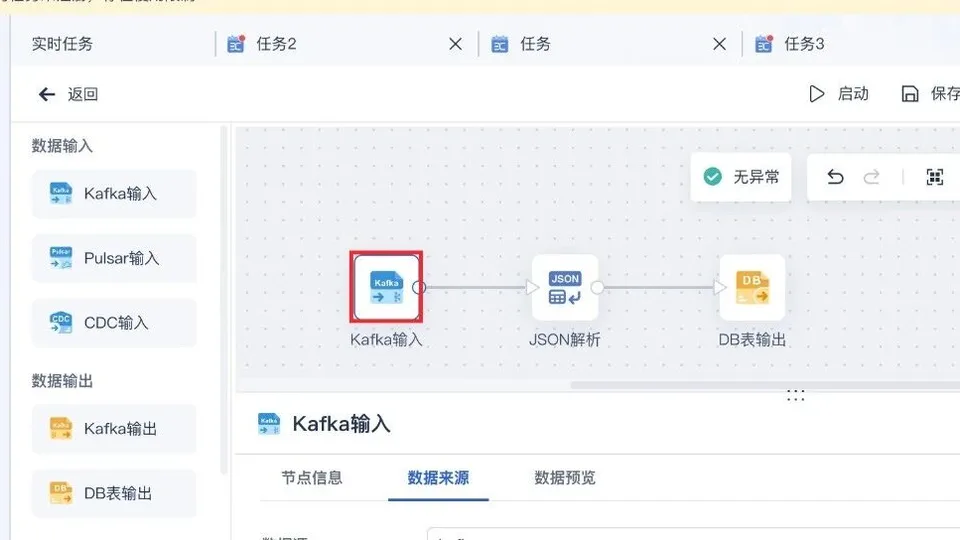
Ziroom migrated 4,400+ MySQL tables to a real-time lakehouse using Apache StreamPark and Paimon, replacing a complex Canal/Kafka/Flink/Airflow pipeline with standardized CDC ingestion, automated job deployment via StreamPark API, and Paimon's snapshot management to reduce source database load and operational overhead.
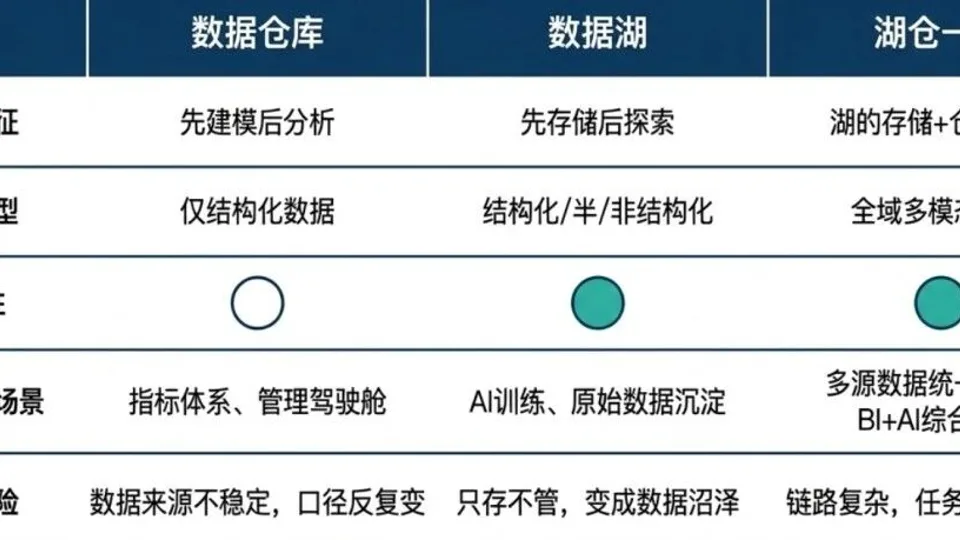
This article clarifies the distinctions between data lakes, data warehouses, and lakehouse architectures, explaining their core philosophies, ideal use cases, common pitfalls like data swamps, and why stable data pipelines matter more than architectural buzzwords.
Apache Auron graduates from incubation to become a top-level project after 13 months, delivering 2x faster Spark query performance and 50% resource savings via its Rust-native vectorized execution engine, already proven at exabyte scale across companies like Kuaishou, DiDi, and LinkedIn.
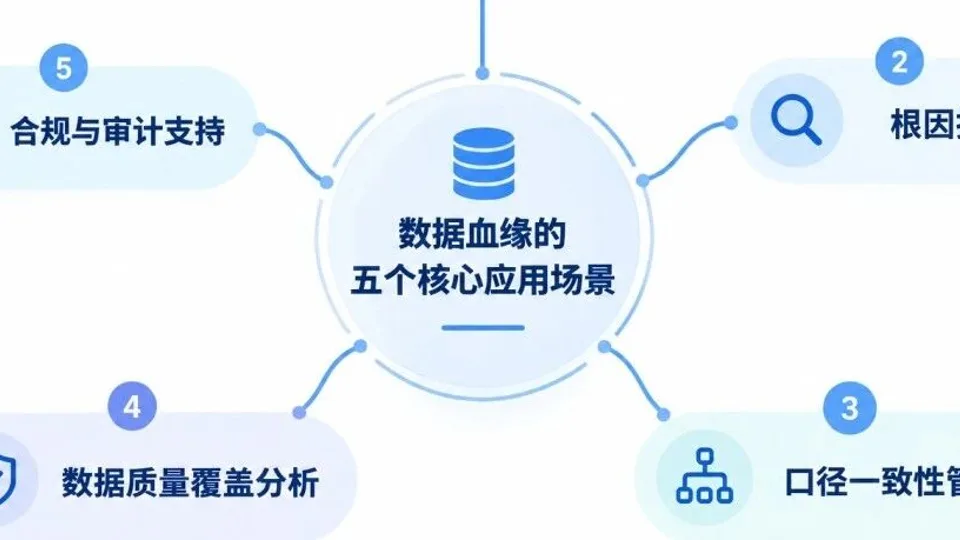
This article explains data lineage concepts, table-level vs field-level lineage, why major tech companies prioritize it, core use cases like impact analysis and root cause detection, three implementation approaches, common pitfalls, and a practical four-step guide for enterprises to start building lineage from critical reports.
Technically integrated data fields with identical names can represent different business events, leading to misleading analytics unless semantic metadata aligns the meaning behind each value.
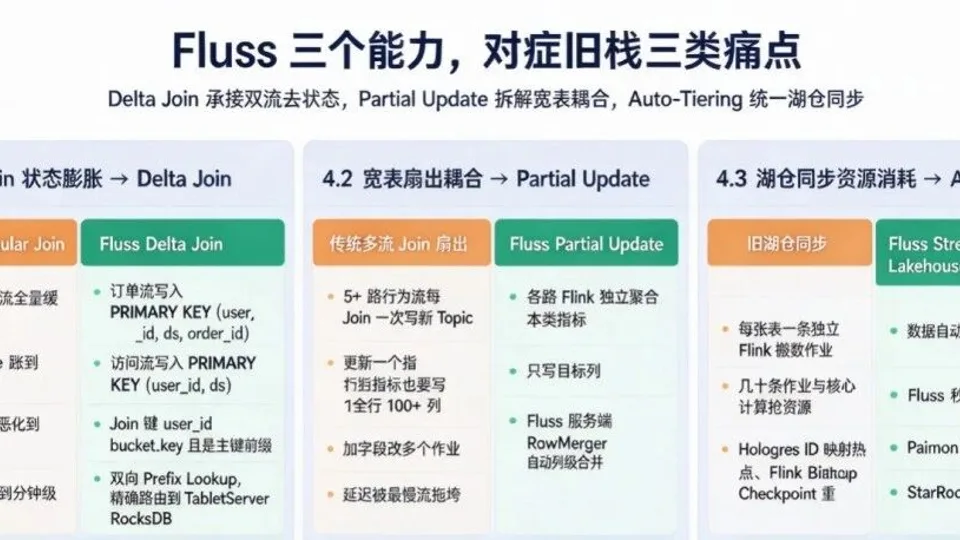
This article details how Taobao's instant retail team replaced their Kafka-Flink-Paimon stack with Apache Fluss to achieve second-level real-time decisions, using Delta Join for stateless dual-stream joins, Partial Update for decoupled wide-table writes, and Auto-Tiering to eliminate sync jobs, while contrasting Ele.me's Paimon+StarRocks evolutionary path.
The article defines high-quality datasets in the AI era by six dimensions—accuracy, completeness, consistency, timeliness, understandability, and traceability—explains why AI amplifies data quality requirements, and outlines a five-step engineering pipeline (aggregation, cleaning, unification, validation, traceability) to transform raw data into reliable AI-ready datasets, emphasizing that continuous data engineering, not data hoarding, enables AI success.
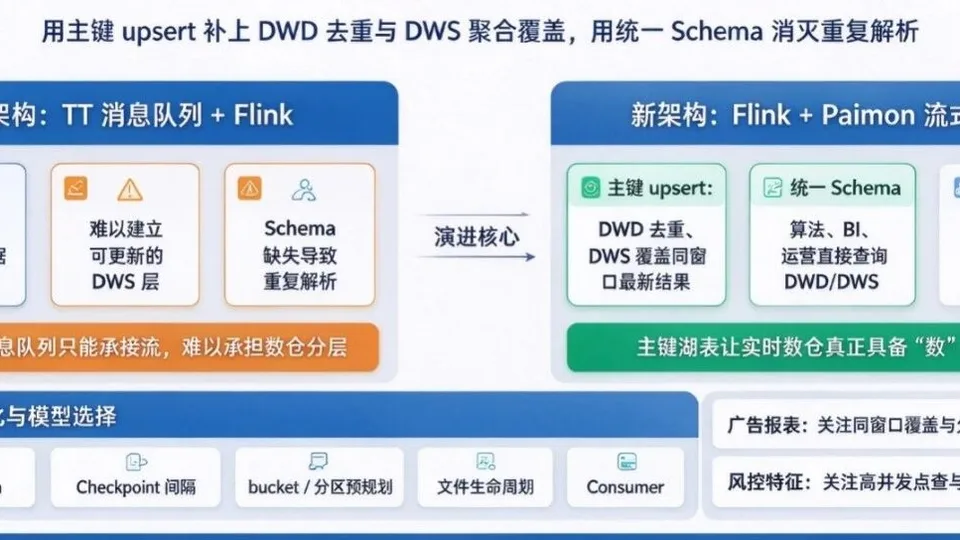
Alibaba Mama evolved its advertising real-time data warehouse from a message queue-based architecture to a Flink + Paimon streaming lakehouse, solving structural defects like lack of deduplication, aggregation layer support, and schema enforcement by leveraging Paimon's primary key upsert and changelog capabilities, while sharing production optimization practices and comparing storage choices for advertising vs. risk control scenarios.
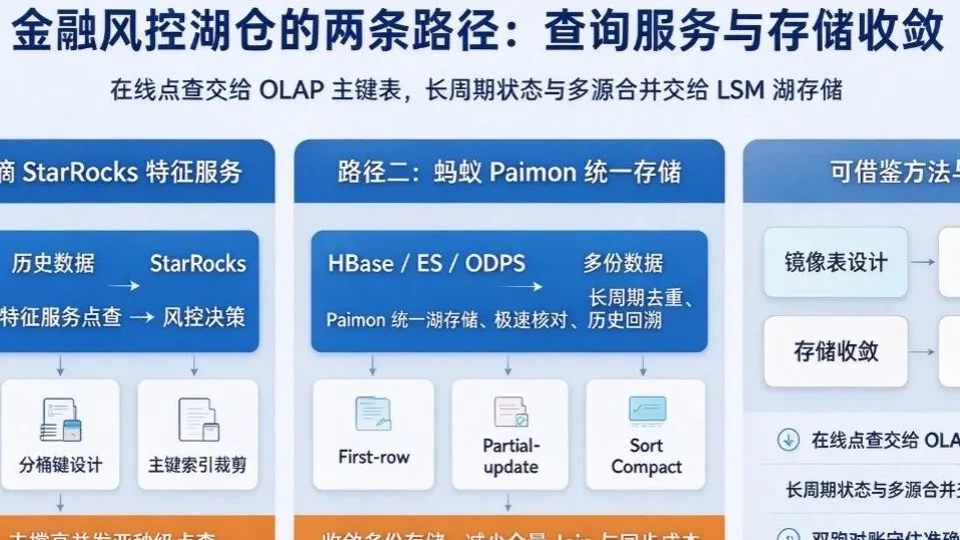
This article analyzes two financial risk control lakehouse architectures: DiDi uses StarRocks to unify real-time and batch feature serving with primary-key tables and bucket pruning, while Ant Group replaces HBase and Elasticsearch with Apache Paimon's first-row, partial-update, and sort-compaction mechanisms for long-window deduplication, fast reconciliation, and historical lookback.
Google's BigQuery Graph with Measures integrates governed metrics with property graphs to give AI agents both accurate calculations and traversable business relationships, enabling root-cause analysis beyond simple metric queries, with zero-ETL mapping from existing tables and Looker integration for unified semantic models.
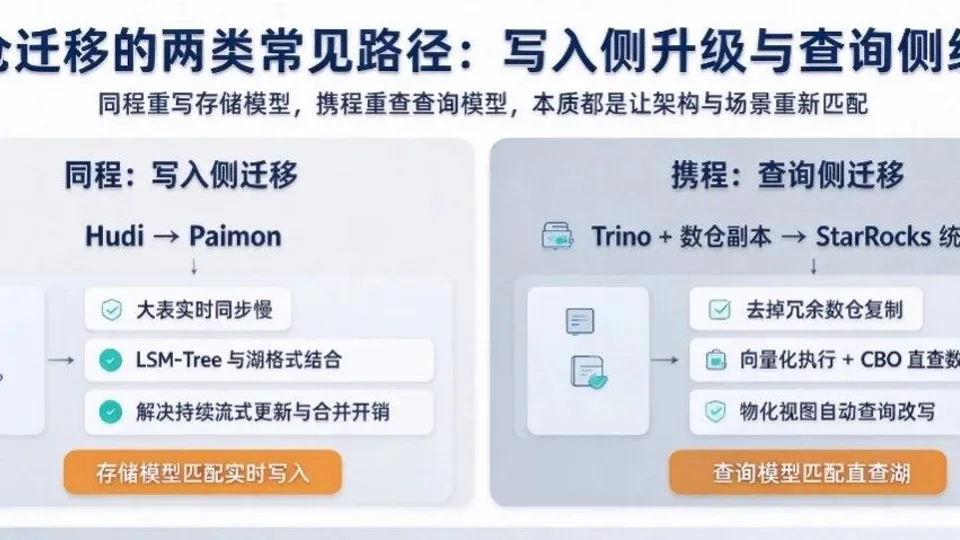
The article analyzes two online travel case studies: Tongcheng Travel migrating from Hudi to Paimon to solve slow large-table real-time writes using LSM-tree storage, and Trip.com adopting StarRocks with materialized views to unify lake queries and eliminate data warehouse copies, detailing migration methodologies, architectural reasoning, and production troubleshooting.
This article explains the three-layer metric hierarchy—atomic, derived, and composite metrics—with e-commerce examples, shows how to define each layer, highlights four common pitfalls like mismatched granularities and ratio averaging, and outlines a five-step process to build a governed metric system from scratch.
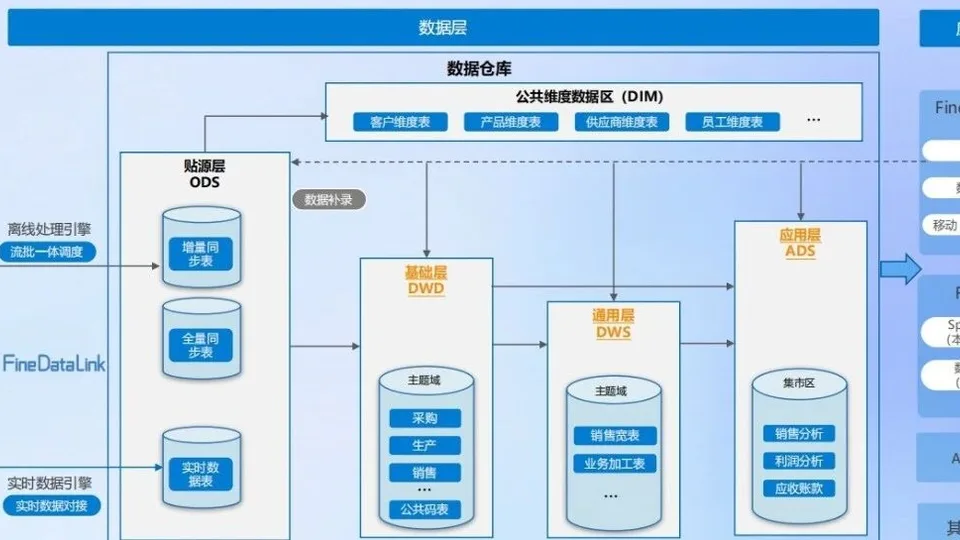
This article outlines the eight core modules of enterprise data architecture—data source, integration, storage, processing, modeling, governance, service, and operations—explaining how each layer ensures data flows reliably from source systems to business consumption while maintaining quality, consistency, and operational stability.
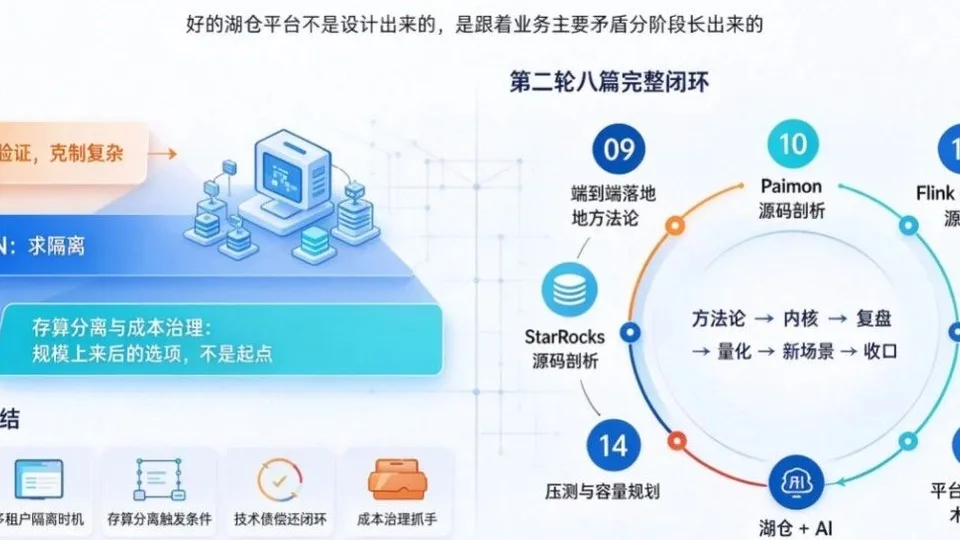
This article outlines a phased roadmap for building lakehouse platforms — from 0 to 1 validation, 1 to N isolation, to storage-compute separation and cost governance — emphasizing that architecture must match the current business contradiction, not chase industry trends.
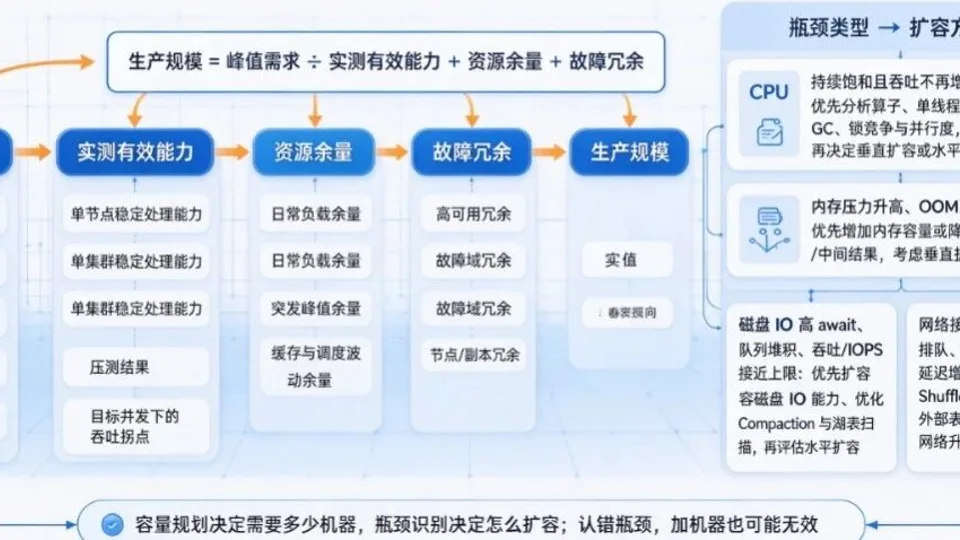
This article presents a complete methodology for lakehouse performance stress testing and capacity planning, covering TPC-DS benchmark adaptation, end-to-end bottleneck identification across CPU, memory, disk, and network, a quantitative capacity derivation framework, and vertical versus horizontal scaling decision criteria for components like Kafka, Flink, Paimon, and StarRocks.