This article explains that www is merely a subdomain convention from the early internet, not a required URL component, detailing how multi-service hosting and technical limitations made it standard, and why modern advances in DNS, HTTPS, and CDNs have led to its decline in favor of naked domains like google.com.
This comprehensive guide covers seven high-frequency OS interview topics — processes vs threads, IPC mechanisms, thread synchronization, deadlock conditions, virtual memory paging, CPU scheduling algorithms, and zero-copy techniques — with visual diagrams, comparison tables, Java code examples, and production pitfalls to move beyond rote memorization.
This article explains five common Java memory leak scenarios—long-lived collections, unclosed resources, ThreadLocal misuse, inner class references, and unregistered listeners—with code examples and recommends MAT and VisualVM for leak detection.
This article introduces C++26's new static reflection mechanism, explaining the two-phase model using the ^^ operator to obtain compile-time reflection info as std::meta::info and the [:...:] splicing syntax to reinject it into code, with practical examples for types and variables.
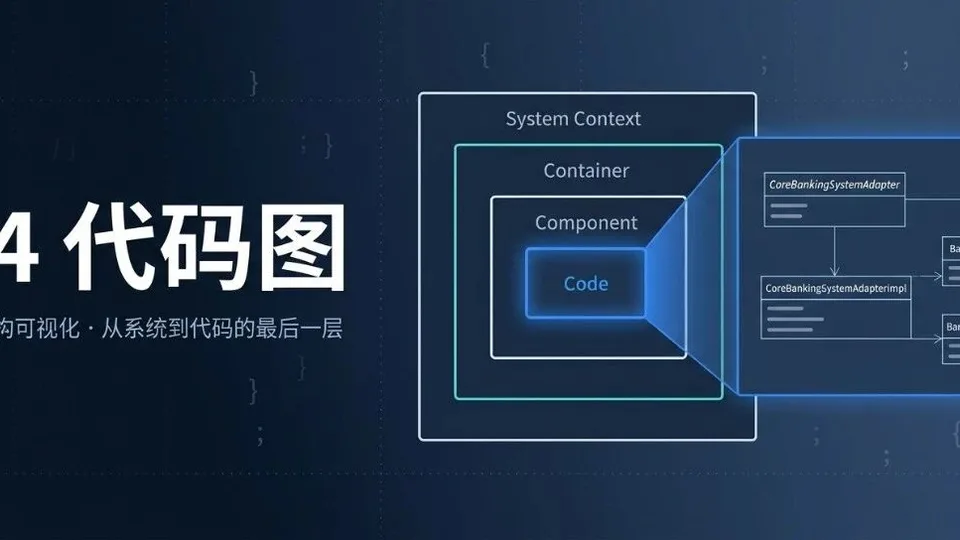
This article explains the C4 model's code diagram level, detailing its purpose, scope, and content, and demonstrates when to create one using a Java-based core banking adapter example with hand-drawn and reverse-generated UML class diagrams.
This article dissects the Linux read() system call, revealing how user-space applications, the kernel, and hardware controllers collaborate via DMA to move data from disk into memory, covering parameters, return values, blocking modes, file-type differences, and the copy_to_user overhead versus mmap zero-copy.
This comprehensive guide covers seven core computer network modules — OSI/TCP-IP models, TCP handshakes, flow/congestion control, TCP vs UDP, HTTP evolution to HTTP/3 and QUIC, HTTPS encryption, and WebSocket — with 20+ diagrams, state machines, Java code examples, and interview-focused explanations for top tech companies.
The article argues that PHP Traits are an underestimated metaprogramming feature offering low cognitive overhead, but their potential is limited by weak composition contracts; it proposes bidirectional contracts allowing traits to require interfaces and implement interfaces, turning traits into predictable compile-time class transformations.
The article shows a Java if-else chain that applies different discounts and actions based on user type, then asks which design pattern can refactor it into more elegant code.
This article explains the four Linux kernel I/O schedulers—NOOP, CFQ, Deadline, and Anticipatory—detailing their mechanisms, queue structures, priority models, and optimal use cases for traditional disks versus SSDs, with specific latency thresholds and database workload recommendations.
This article explains the critical behavioral difference when placing try-catch inside versus outside a for loop: outside placement terminates the loop on exception, while inside allows continuation. It also analyzes performance implications, showing negligible overhead when no exceptions occur but increased memory consumption if many iterations throw exceptions, and details the JVM exception table mechanics that underlie this behavior.
This article explains why 100 meters is the standard Ethernet channel limit, how signal attenuation and crosstalk degrade reliability beyond that distance, why cable category (Cat5e/Cat6/Cat6A) determines maximum distances for 1Gbps and 10Gbps, and when to use switches or fiber for longer runs.
This article explains how Java's final keyword ensures cross-thread visibility of final fields through the JMM's freeze action at constructor end, provided the this reference does not escape during construction, demonstrating with a code example that shows a race condition when this escapes and the correct behavior when final fields are properly frozen.
This article explains how category theory addresses three core modeling challenges—verifying correctness, composing models, and maintaining consistency across abstraction layers—by using commutative diagrams to define model validity, functors to preserve structure across representations, and pullbacks to enforce interface compatibility, with examples from numerical analysis, unit conversion, and fluid-structure coupling.
This article explains how computers store Chinese characters using Unicode and UTF-8, covering the history of encoding chaos, Unicode code points, UTF-8 variable-length encoding rules, a step-by-step example of encoding '中', common mojibake causes, BOM, and programming best practices like using utf8mb4 in MySQL.
The article argues that AI-generated code accelerates entropy in codebases, advocating independent atomic commits—single-purpose, indivisible, independently applicable—as a critical practice, detailing four defenses: logical isolation, auditability, reduced collaboration entropy, and preventing code rot, with implementation via CI/CD, IDE tooling, and cultural metrics.
This article introduces thread safety by explaining threads, shared memory, and thread switching, then demonstrates a race condition where a Java counter loses increments due to non-atomic count++, and shows how synchronized fixes it by serializing access.
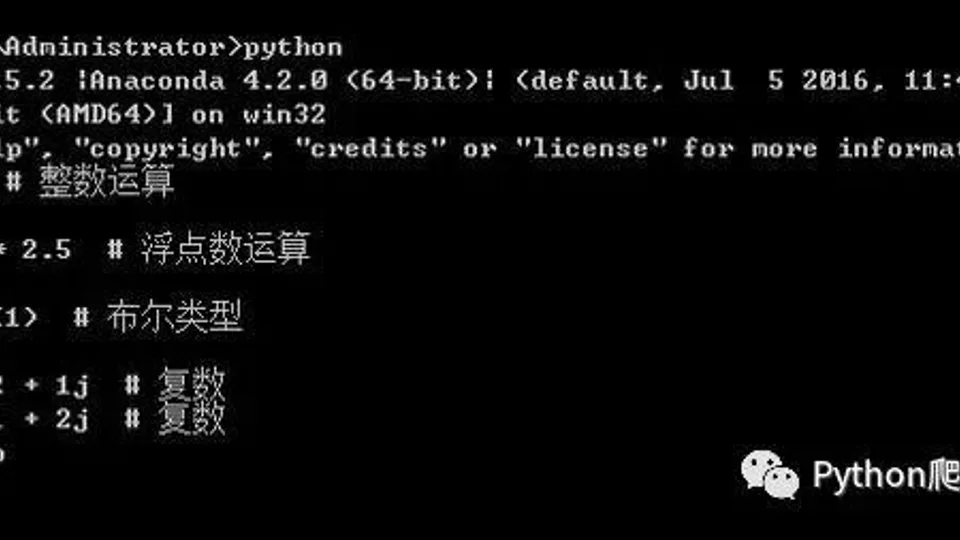
This tutorial covers Python's built-in numeric types including integers, floats, complex numbers, booleans, and fractions, with detailed examples of division behavior differences between Python 2 and 3, floor division, modulo operations, and the fractions module for precise rational arithmetic.
INSLIB is an open-source C library for inertial navigation that implements aviation-grade engineering practices including MC/DC testing, requirements traceability, and numerically stable UDU square-root Kalman filtering, designed for bare-metal embedded systems with multi-sensor fusion support.