This tutorial walks through building a simple penalty‑shootout game in Java Swing by outlining the panel architecture, rendering the audience, grass, goal and net with Graphics2D, computing a QuadCurve2D trajectory, handling mouse dragging and clicks to animate the ball, detecting collisions, and updating score and timer.
This article compiles real-world examples and practical guidance for identifying, assessing, and mitigating risks throughout the game development lifecycle, offering QA teams concrete strategies for risk definition, early estimation, and handling of demand, quality, process, testing, and operational challenges to improve overall risk management.
This article chronicles Tim Sweeney's journey from a teenage programmer to Epic Games founder, outlines the history and technical milestones of the Unreal Engine series, and explores its wide-ranging applications across gaming, 3D modeling, film, and the metaverse.
A technical discussion explains that game servers prioritize ultra‑low latency and stateful in‑memory communication, making micro‑service architectures impractical despite their benefits for modularity and scaling, especially in fast‑paced MOBA titles.
This guide introduces Ryujinx, an open‑source Nintendo Switch emulator written in C#, outlines its development history and compatibility stats, and provides three clear steps—installing .NET 7 SDK, cloning the repo, and building the project—to get the emulator up and running.
BattleBit Remastered is a low‑poly, large‑scale multiplayer FPS that supports up to 254 players per match, offering extensive class and weapon options, a minimalist UI, destructible environments, and strong team‑communication tools, all while running on minimal hardware requirements.
This article reflects on a QA intern’s transition from academia to the workplace, detailing mindset changes, the purpose and value of testing, and the three-layered core competencies that new game QA engineers should develop to succeed in the industry.
This article shares Taobao Life's journey into the Metaverse, detailing how to evaluate and select mobile 3D engines, compare Web, Native and Hybrid approaches, build professional 3D art workflows, balance visual quality with performance, and cultivate a battle‑ready 3D team.
This article examines the design strategies behind the T‑level interactive game for Double‑11, detailing how a clear gameplay framework, continuous content feedback, and layered user segmentation were used to lower entry barriers, increase retention, and expand coverage, ultimately driving significant UV growth.
The article surveys GPU rendering pipelines and hardware architectures for desktop and mobile, explains classic stages, compares Immediate Mode, Tile‑Based and Tile‑Based Deferred rendering, details PowerVR, Mali and Adreno components, and offers optimization advice on draw calls, depth pre‑passes, shader efficiency, and render ordering.
The article analyzes how game UI and interaction design translate abstract game mechanics into concrete player actions, using examples like Just Dance, Naraka: Bladepoint, and It Takes Two, and discusses tutorials, HUD layout, visual/audio cues, and hidden information to enhance playability in complex games.
Game server developers often avoid microservice architectures because real‑time performance, low latency, and stateful in‑memory processing are critical, and the added network overhead, stateless constraints, and complexity of service meshes can degrade gameplay, making monolithic or tightly‑coupled designs more suitable for fast-paced multiplayer games.
This article explains how to accurately test, record, and maintain art asset dependencies in Unity projects, describing the use of Unity's Select Dependencies interface, database design for storing direct and indirect relationships, and practical applications such as automated SVN integration, resource cleanup, and impact alerts.
This guide details practical performance‑optimization techniques for Cocos‑based WeChat mini‑games, covering scene and prefab optimizations, asset compression, code size reduction, garbage‑collection handling, mask usage, plugin assistance, code‑level improvements, and a suite of testing tools to measure and verify the gains.
This article examines the importance of inclusive language in game localization, defines its principles, outlines common pitfalls such as gendered and racial terms, presents practical guidelines and multilingual strategies, and argues that adopting equitable language fosters a fairer, more welcoming gaming experience for diverse players worldwide.
This article compiles the most common questions from participants of the NetEase Cloud Communication Innovation 2022 Developer Contest, covering SDK basics, free usage, feature support, integration tutorials, server requirements, network topology, rate limits, team accounts, platform compatibility, billing notices, and verification methods.
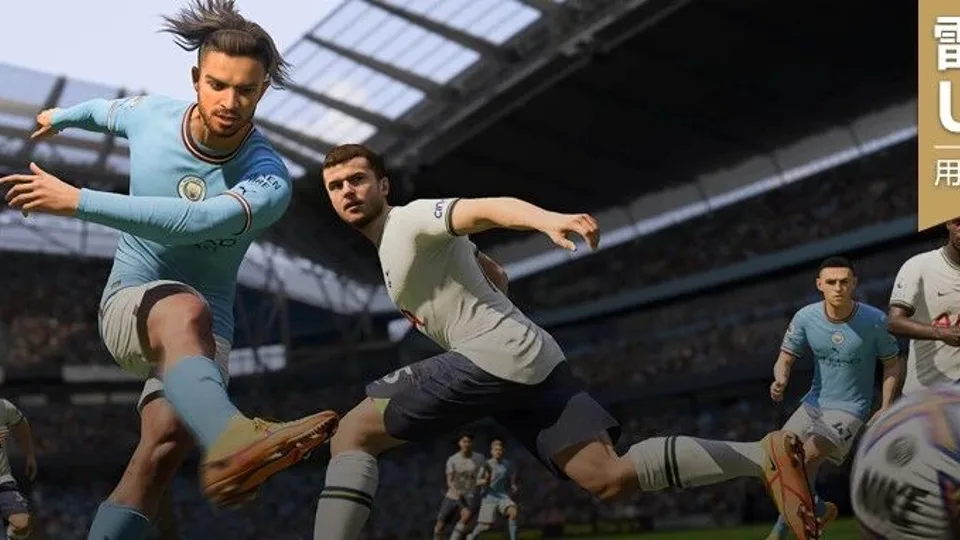
Despite the global popularity of sports video games such as FIFA and NBA 2K, the Chinese market struggles with few titles, homogeneous gameplay, high development barriers, and monetization issues, prompting a need for diversified design, esports integration, and strategic marketing to unlock its large potential.
This article presents a comprehensive guide to Unity rendering pipelines, key terminology, and practical performance‑optimization techniques—including AR, texture, memory, heat, and package‑size improvements—applied to the VI Sales Crown product, with detailed tools, methods, and measurable results.
This tutorial explains how to transfer a Bitmap from Java to the native layer using the NDK, retrieve its pixel data with jnigraphics, create and configure an OpenGL texture, set up vertex and fragment shaders with proper texture coordinates, handle Y‑axis flipping on Android, and finally blend multiple textures for advanced rendering effects.
This article explains how mobile games assign default graphics quality levels to various devices using configuration tables, code‑based matching, and a hybrid approach, detailing iOS and Android specifics, server switches, testing practices, and the trade‑offs of each method.