This article examines how game developers can increase players' willingness to pay during the crucial first hour of gameplay by analyzing unlock mechanisms, selecting appropriate early‑stage paid content, and eliminating UI and discovery bottlenecks through competitive analysis and user research.
This article examines the evolving Chinese gaming market, consumer confidence trends, and the psychological and motivational factors that drive players—especially Gen‑Z—to spend money on games, offering insights into pricing strategies, player segmentation, and industry challenges.
This article explains the fundamentals of texture mapping in OpenGL ES, covering texture objects, mapping theory, texture coordinates, wrapping modes, filtering techniques, texture units, and provides practical guidance for implementing these concepts in graphics applications.
This article explains how exploratory testing—a mindset that blends learning, design, and execution—can be applied to game QA, compares it with traditional and ad‑hoc testing, answers common questions, discusses its relationship with automation and AI, and shares practical tips from real‑world experience.
A team of three spent over ten months constructing a 1 Hz CPU, custom GPU, and complete game logic inside unmodded Minecraft using only redstone, enabling a playable 3D version of Minecraft within Minecraft itself.
This article explains mobile game memory optimization, covering RAM vs ROM, resource memory reduction for textures, models, animations, streaming load, unused resource unloading, and detecting memory leaks, while providing practical QA testing methods to ensure performance without compromising visual quality.
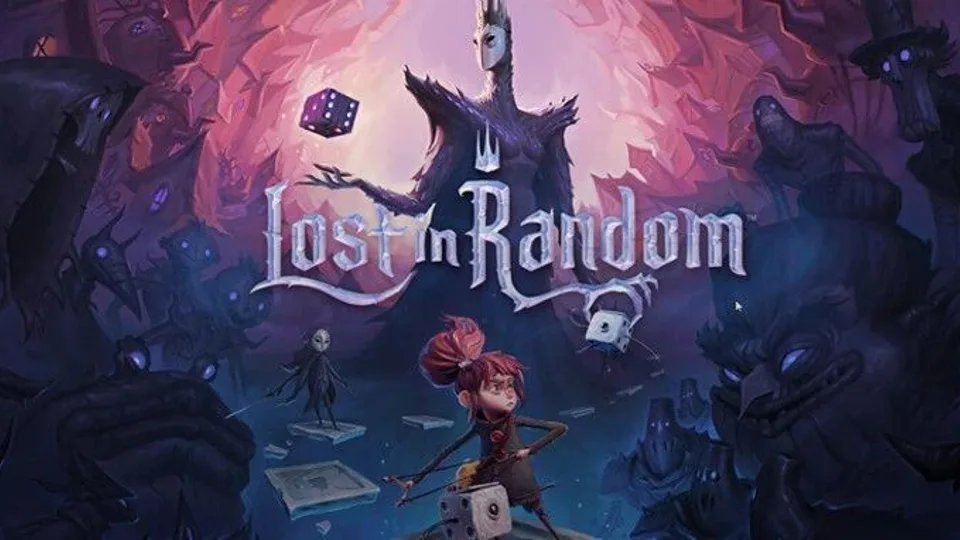
The article examines Zoink’s action‑adventure title Lost in Random, detailing its narrative premise, gothic visual style, dice‑driven card combat system, streamlined UI, and intuitive controls, and explains how these elements combine to create a cohesive, engaging gameplay experience.
This article walks through recreating the popular ‘Sheep a Sheep’ puzzle game using Godot Engine, detailing the game’s mechanics, three stack patterns, data structures, detection of selectable tiles, level generation, shuffling, mask handling, and inter‑object communication, while sharing code snippets and design insights.
This article explores how cinematic storytelling, trailer structures, and emotional design principles from movies can be applied to game interaction design, offering practical examples, design questions, and case studies that illustrate ways to deepen player immersion and create more compelling gameplay experiences.
The author explains how the viral “Sheep Sheep” puzzle’s random mechanics make it nearly impossible to clear, then details the creation of a clone called “Fish Fish” with customizable difficulty, open‑source code, and the core implementation techniques used.
This article explains the evolution of multiplayer game server architectures, compares client‑server and P2P models, details communication via long‑lived sockets, and explores frame‑sync, state‑sync, prediction, reconciliation and interpolation techniques with a complete React + Socket.io demo.
This guide explains how to log in, list, start, and play the Dou Dizhu card game in IntelliJ IDEA, covering both single‑player and multiplayer modes, debug display options, and special commands for mode switching and chat hiding.
This article presents a comprehensive methodology for creating high‑coverage test cases for UI‑driven games, covering evaluation criteria, user‑centric design steps, entry‑point analysis, UI element partitioning, static and dynamic checks, business‑flow testing, data‑storage validation, and additional considerations such as network conditions, compatibility, performance, and UX.
The article presents a comprehensive approach to Android game multi‑channel packaging, combining independent SDK modules with a unified proxy layer and an apktool‑based merge of manifests, resources, and smali code, automated through scripted Jenkins pipelines, which resolves dex limits, resource conflicts, and cuts packaging time from over an hour to roughly twenty minutes.
This article explains how to build a Python version of the popular Chinese card game ZhaJinHua, covering deck preparation, player enrollment, card dealing, hand‑type detection, scoring rules, winner determination, and statistical analysis of thousands of simulated rounds.
This article shares a detailed post‑mortem of the 818 3D runner game developed with Oasis Engine, covering track and character design, shader tricks, asset reduction, memory and performance optimizations, code structure, and troubleshooting of crashes and overheating, offering practical insights for developers building similar high‑traffic mobile games.
This article introduces Bilibili’s self‑developed BVA avatar file format, compares it with VRM, details its features such as unified model specifications, advanced material support, dynamic bone physics, and provides step‑by‑step Unity integration, export procedures for avatars, scenes, and runtime loading, along with sample code and resources.
This article presents a game‑testing automation framework that records manual gameplay actions, captures client state, generates reproducible scripts, handles input events and GM commands, and discusses its architecture, limitations, and future improvements in detail.
Unreal Engine 5, a powerful real‑time 3D creation platform, is reshaping game development, film production, architectural visualization, automotive design, simulation, and virtual events by offering open‑source C++ APIs, visual scripting, high‑fidelity rendering, and seamless workflow integration across industries.
At GDC 2022, the creators of Naraka: Bladepoint detailed how they designed a popular face‑customization system, covering why a battle‑royale game needs it, user research insights, key facial features, AI‑driven tools, cultural aesthetic considerations, sustainability, and its impact on player engagement and the industry.