This article explains how to adapt real‑world physics for games like Angry Birds by scaling speeds, adjusting mass, redefining gravity, and implementing force accumulators and generators in JavaScript, providing code examples and practical tips for realistic projectile motion.
Texture compression dramatically reduces memory and CPU decode costs while allowing GPUs to read data directly, making formats such as ETC1/2, ASTC, PVRTC and S3TC essential for WebGL and mobile game graphics, though developers must manage lossy quality, size constraints, and platform support.
This article explains how noise algorithms such as Perlin, FBM, and Worley can complement Physically Based Rendering (PBR) to overcome its limitations, presenting theoretical background, shader implementations, and visual results that demonstrate more realistic and dynamic textures for graphics applications.
This article presents a complete walkthrough of a Werewolf multiplayer game built as a WeChat mini‑program, detailing the game rules, UI design, role configuration, and providing full WXML code for the home page, role selection page, and special role mechanics.
This article presents a comprehensive walkthrough of a Werewolf tabletop game mini‑program, detailing project features, role descriptions, UI design, and providing full front‑end code for the home page, role selection, and gameplay screens, along with visual screenshots and download links.
This article outlines essential considerations such as reward distribution, timing, resource reuse, performance and compatibility, and presents practical testing techniques—including design‑doc review, code review, tool usage, process control, and communication—to ensure robust and stable festival event releases in online games.
This step‑by‑step tutorial shows how to install an ARM‑compatible Java runtime, configure the HMCL launcher, replace LWJGL libraries, and launch Minecraft with Fabric and dozens of mods on an M1 Mac, all without using Rosetta translation.
This article explains how to implement an automatic missile‑tracking system for a shooting game using Python’s Pygame library, covering the underlying differential‑equation‑based algorithm, step‑by‑step trigonometric calculations, handling of coordinate systems, image rotation challenges, and provides complete source code.
This article examines the various categories of in‑game festival events, explains why they are designed, outlines their key characteristics such as simplicity and attractive rewards, and details the typical modules and common pitfalls that QA and designers should consider when implementing them.
This tutorial explains the concepts of first‑person and third‑person perspectives and provides a step‑by‑step guide, including matrix theory and complete Three.js code, to create a camera that smoothly follows a character in a web‑based 3D game.
This tutorial walks through building a simple Fruit Ninja‑style game in Python using Pygame, covering imports, window setup, random fruit generation, drawing text and lives, handling game over screens, and implementing the main loop with event processing and scoring.
This tutorial walks you through WebXR concepts, the A‑Frame framework, ECS architecture, and step‑by‑step code to create a simple VR game, covering scene setup, assets, primitives, components, JavaScript interaction, and audio integration for a complete web‑based XR experience.
This article presents a collection of thirteen Python game development examples, each with a brief description, gameplay illustration, and complete source code using libraries such as pygame and PyQt5, covering games like coin collector, ping‑pong, skiing, space shooter, whack‑a‑mole, dinosaur runner, match‑3, Tetris, snake, 24‑point puzzle, balance beam, alien invasion, and tic‑tac‑toe.
The article surveys motion retargeting, describing its importance for virtual characters, outlining traditional geometric methods and recent deep‑learning approaches, presenting a customized Interaction Mesh‑based solution from Kuaishou Y‑tech, and discussing performance, limitations, and future research directions.
This article introduces a complete Python ski game built with Pygame, explaining the game mechanics, displaying screenshots of the interface and animation, and providing the full source code along with required image assets for readers to understand and recreate the project.
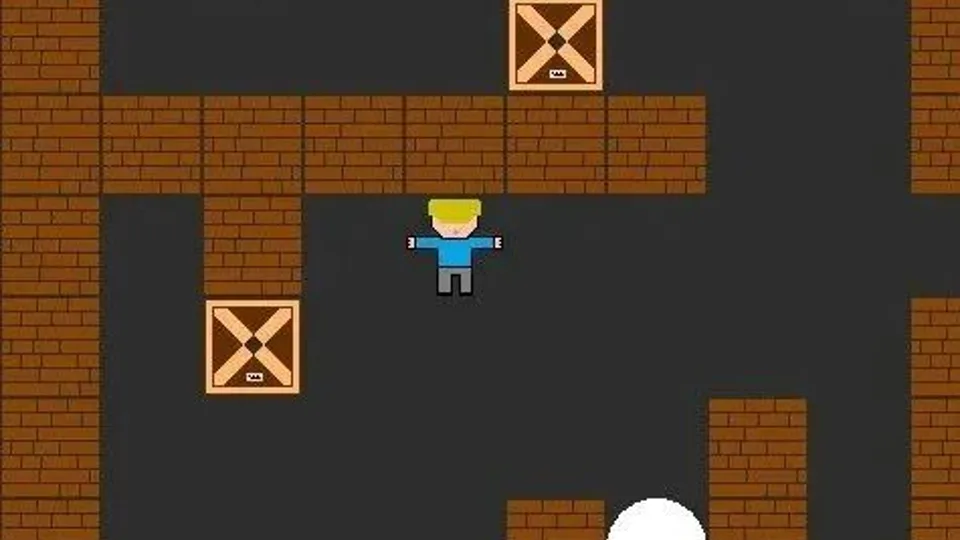
This article walks readers through creating a classic Sokoban-style game using Python 3.6.4 and the Pygame library, covering environment setup, sprite and map class definitions, UI handling, game loop logic, and final integration with start, transition, and end screens.
This article explains what shaders are, how they run on the GPU, and walks through each stage of the OpenGL graphics pipeline—from vertex processing to rasterization, fragment shading, and alpha testing—providing a comprehensive foundation for graphics programming.
This guide walks you through creating a VR promotional video with C4D and Octane, covering project background, pre‑production planning, storyboard creation, 3D modeling, texturing, rigging, animation, lighting, rendering, and post‑production steps such as editing, color grading, audio, and voice‑over.
From early computer chess and arcade experiments to modern AI and virtual reality, games have continuously pushed hardware, software, and networking advances, inspiring breakthroughs such as UNIX, GPUs, game engines, and even medical research, proving that play is a powerful catalyst for technological progress.
This article provides a step‑by‑step Python programming tutorial for the traditional Chinese two‑player game "Gan Zi Lao Hu Ji Chong", detailing numeric mappings, conversion functions, round evaluation, and probability simulation to help learners build and test the game logic.