This article outlines six fundamental differences between Unix and Linux, covering shell standards, command options, make implementations, C compilers, GNU vs Linux distinctions, and the UNIX trademark, with practical guidance for writing portable code.
This article details eight common Palantir Ontology anti-patterns grouped into four root causes—system silos, department silos, overloaded objects, wrong execution layers, and poor naming—and provides a prioritized repair checklist to keep ontology models aligned with business reality.
British engineer Tommy Flowers designed and built Colossus, the world's first programmable electronic digital computer, in 1944 — two years before ENIAC — but it remained classified for decades, denying Flowers recognition.
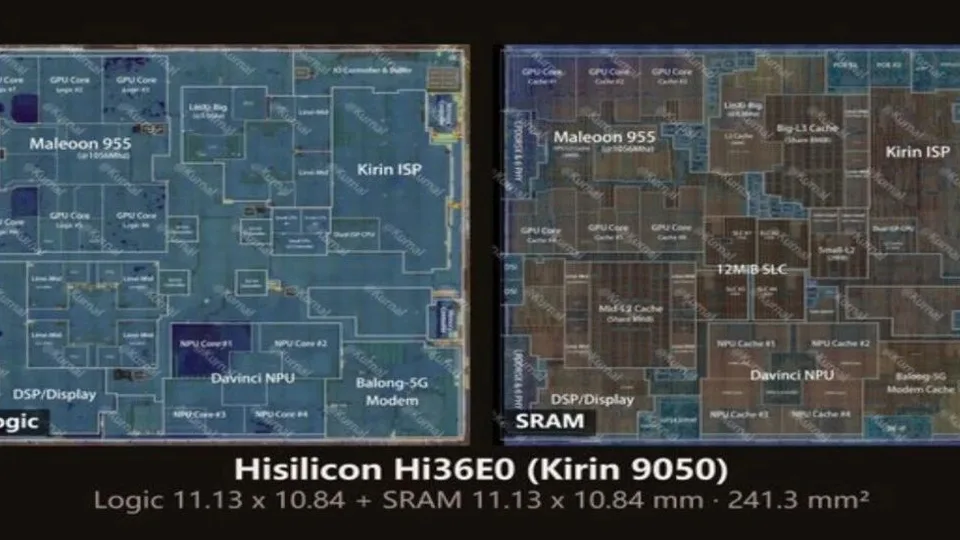
Deep technical analysis of Huawei's Kirin 9050 Pro chip reveals a dual-die 3D-stacked architecture using copper-copper hybrid bonding, separating compute logic from SRAM cache to achieve 125 TB/s inter-die bandwidth and 2.38B transistors/mm² density, surpassing prior 2D designs.
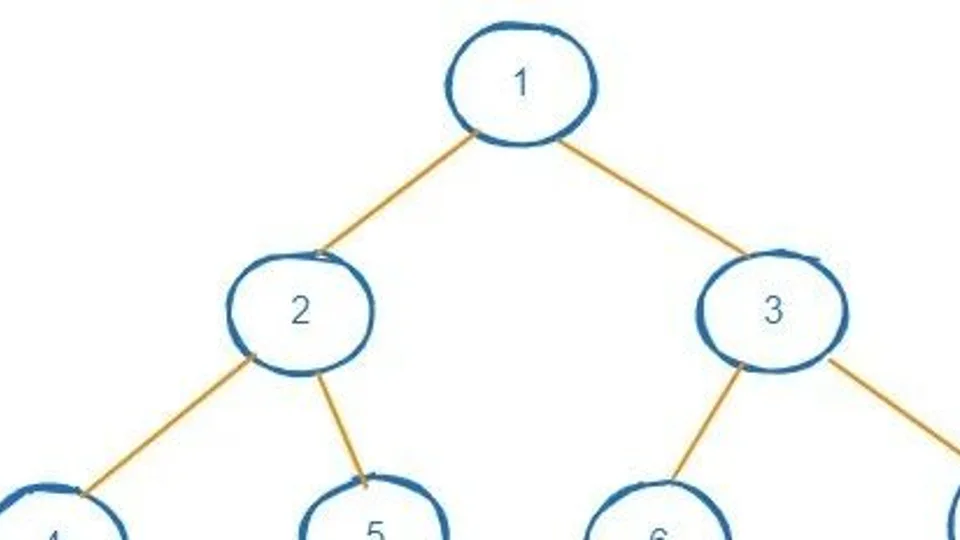
This article explains binary tree representation in Java and demonstrates recursive pre-order, in-order, post-order, and iterative level-order traversals, plus methods to create a full binary tree, count nodes, compute height, and count leaf nodes with complete runnable code.
This article breaks down Palantir's four prioritized ontology modeling principles—domain-driven design, DRY with Rule of Three, open/closed extension, and composition over inheritance—illustrating each with concrete anti-patterns and a practical 12-question review checklist to prevent model fragmentation as teams scale.
This article explains Simpson's Paradox through a numerical example where Plan A outperforms Plan B in both simple and difficult tasks individually, but Plan B appears better when aggregated due to differing task distributions, illustrating how hidden variables can reverse aggregate conclusions and how to avoid such pitfalls.
This article analyzes 13 embedded state machine types—from basic switch-case to advanced hybrid, hierarchical, and neural network models—detailing their structures, pros, cons, and ideal use cases, plus selection criteria based on complexity, resources, real-time needs, and maintainability, with interview answering strategies.
This article traces the historical development of network hardware, explaining how each device—from cables and repeaters to switches, routers, firewalls, and wireless APs—solves specific connectivity, distance, speed, security, and congestion challenges, culminating in modern home, enterprise, campus, and data center network architectures.
This article breaks down Palantir Ontology's core components—Object Types, Properties, Link Types, and Action Types—using a high-risk order example, contrasts it with knowledge graphs, details how Agents leverage it for decision-making, and recommends starting with a minimum viable ontology for practical adoption.
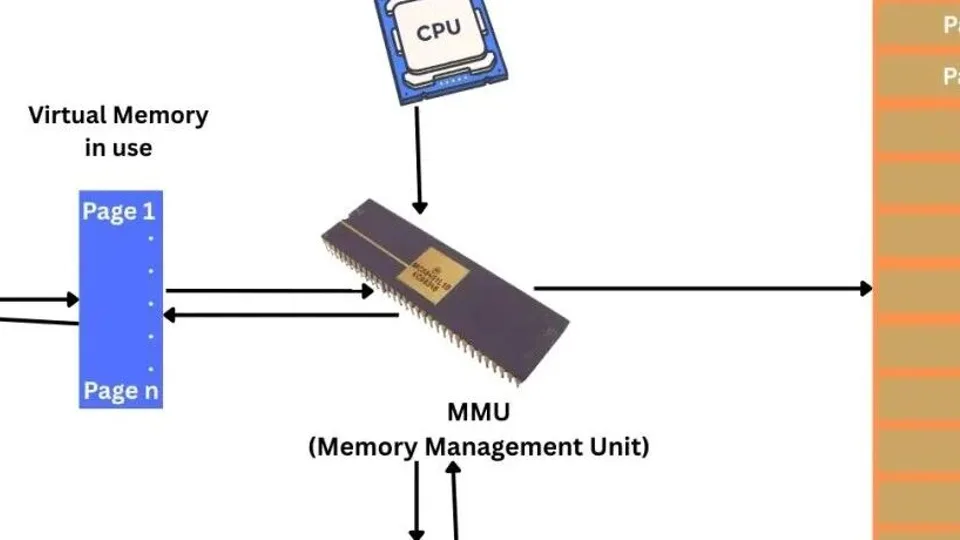
This article explains virtual memory using a desk analogy, detailing how it solves insufficient RAM, memory fragmentation, and security issues through page tables, MMU address translation, page faults, and swapping, while providing each process an isolated virtual address space.
This article reveals big tech's zero-tolerance policy on AI-assisted interview cheating — including lifetime bans recorded in feedback systems — and provides a detailed solution to LeetCode 1224 (Maximum Equal Frequency) with counting-based case analysis and implementations in Java, C++, Python, and TypeScript.
This article explains how missing volatile causes infinite loops when waiting for interrupt-set flags, demonstrates compiler optimization caching variables in registers, and clarifies volatile's limits in multi-core systems and atomicity guarantees.
This article uses coffee brewing as a case study to define a reusable business ontology that distinguishes recipe versions, execution plans, actual brews, records, products, and evaluations, emphasizing traceable instance relationships, versioning, provenance, and constraint validation without conflating plan with actuals.
The article uses the film 'Detective Traces' and its real-life prototype Cui Daozhi to explain how forensic trace examination — bite marks, fingernail fragments, fingerprints — is formalized into a mathematical model of feature measurement, random-match probability, error trade-offs, Bayesian updating, and experimental validation.
This article applies Object-Process Methodology (OPM) to model a hand-pour coffee brewing process, illustrating how to distinguish objects, processes, states, enablers, agents, and transformees, and how to link them to requirements and tasks while identifying resource occupancy gaps.
This article demonstrates Mission Engineering principles by using a morning coffee routine to show how to establish a baseline, compare isolated process changes (pre-preparation vs. detailed recording), design a run matrix for experimentation, and define abandonment criteria before investing in new equipment.
Zig 0.17.0 introduces a two-phase build system separating configuration and execution, a Build Server Protocol for editor integration, a self-hosted incremental ELF linker on x86_64-linux, and a thread-safe SafeAllocator cutting memory use by 50% and test time by 25%, alongside breaking language semantic changes like @bitCast redefinition.
This article comprehensively explains DDR memory principles, covering evolution from SDRAM to DDR5, double data rate and prefetch mechanisms, DDR subsystem architecture, DDR4 vs DDR5 comparisons including speed, voltage, DIMM architecture, burst length, and capacity, plus detailed terminology definitions for Channel, DIMM, Rank, Bank, and Bank Group.
A veteran engineer recounts how deep Linux kernel knowledge resolved a catastrophic zombie-process outage across thousands of CentOS 6 servers, then explores the Unix philosophy of user autonomy, tool composability, and transparent system design that makes Linux essential for serious engineers.