This article explains how Tencent IEGG leverages data‑driven KOL marketing across four key scenarios—budget planning, KOL evaluation, performance measurement, and competitor monitoring—to address cultural differences, optimize spend, and boost game adoption in the European‑American PC and console markets.
This article explores how financial institutions can design and continuously optimize membership programs by identifying key moments, strengthening benefit perception, leveraging golden timing, and employing multi‑touch communication to increase user satisfaction, loyalty, and profitability.
The article argues that seasoned developers should master the skill of cutting unnecessary requirements, explaining its purpose, principles, and practical techniques—including aligning goals, using data, iterative splitting, and finding alternatives—to improve project efficiency and satisfy managerial expectations.
This article examines Huaisen, a Kuaishou‑incubated karaoke and music video app, analyzing the K‑song market’s size and challenges from short‑video platforms, and detailing Huaisen’s innovative features such as music bullet comments and a reshaped karaoke workflow to revitalize the offline K‑song community.
The Double Diamond model offers a structured, four‑step design workflow—discover, define, develop, and deliver—that helps teams identify the right problems, generate diverse solutions, and refine them into effective designs, improving both internal efficiency and external stakeholder alignment.
This article explores the internal design logic and systematic framework that drive product development, using the 58 Yellow Pages redesign as a case study to illustrate how AI, user research, iterative testing, and strategic thinking guide each stage from problem discovery to final implementation.
This article examines why conventional benefit‑heavy copy often fails in recruitment scenarios, recounts a real‑world experiment that replaced flashy promises with clear, necessity‑focused messaging and streamlined design, and shows how those changes tripled conversion rates while offering broader lessons for product copywriting.
The article analyses the low efficiency problems faced by Chinese SaaS firms across product, development, customer acquisition and after‑sales, identifies root causes such as homogenous offerings, poor demand management, weak R&D processes, and proposes strategic, cultural, architectural, procedural and metric‑driven solutions to boost overall performance.
The article explains product thinking as a comprehensive mindset that combines empathy, craftsmanship, user value, and business value, offering practical guidance on how product managers can deeply understand users, continuously refine their work, and align product outcomes with sustainable commercial success.
Three warning signs of impending corporate decline are: management eclipsing operations with endless meetings and approvals, executives echoing only flattering feedback while silencing truth, and expanding headcount that drags productivity down, urging leaders to spot these patterns early and intervene before collapse.
The article argues that programmers should cultivate product thinking by understanding the background, value, and user impact of features, highlighting how this mindset distinguishes them from pure engineering, improves collaboration with product managers, and helps prioritize genuine user needs over superficial or duplicated functionalities.
This article chronicles the author's three‑year journey as an AI product manager at JD.com, detailing the decision to enter the AI field, key project experiences such as platform integration and edge‑intelligence, a three‑stage growth roadmap, essential capabilities across four quadrants, and a forward‑looking view of AI's industry impact.
This article explains why and how to conduct A/B testing for UI design, outlines experiment setup, variable creation, and data analysis, and presents detailed case studies of JD Express mini‑program pop‑up and order‑completion page experiments that demonstrate measurable improvements in click‑through and conversion rates.
This article chronicles the three‑year journey of building an enterprise‑grade CRM system—from early Excel‑based tracking through external SaaS attempts to a fully custom platform—detailing the business motivations, technical challenges, architectural decisions, and measurable outcomes such as higher GTV, reduced costs, and faster workflows.
This guide explains the definition, objectives, common goals, step‑by‑step process, and popular methodologies—including PEST, SWOT, Porter’s Five Forces, BCG matrix, qualitative and quantitative techniques, questionnaire design, sampling, and statistical analysis—used to conduct effective market research for product development.
A recent Progress Software report reveals that over half of organizations plan to increase investment in human‑centered software development, highlighting five core pillars, key challenges, and practical recommendations for creating inclusive, user‑focused applications.
This article explains how Baidu's iCaiGou B2B platform redesigned its tag system—covering tag purposes, classification, weighting, visual style, color, typography, and collaborative processes—to improve user decision‑making and maintain a consistent product experience.
This article showcases six recent UI animation case studies from popular Chinese apps—Gaode, Meituan, Didi, Tongcheng, Xianyu, and Didi Carpool—detailing their design techniques, user feedback mechanisms, and AI integration to inspire designers seeking effective, engaging product experiences.
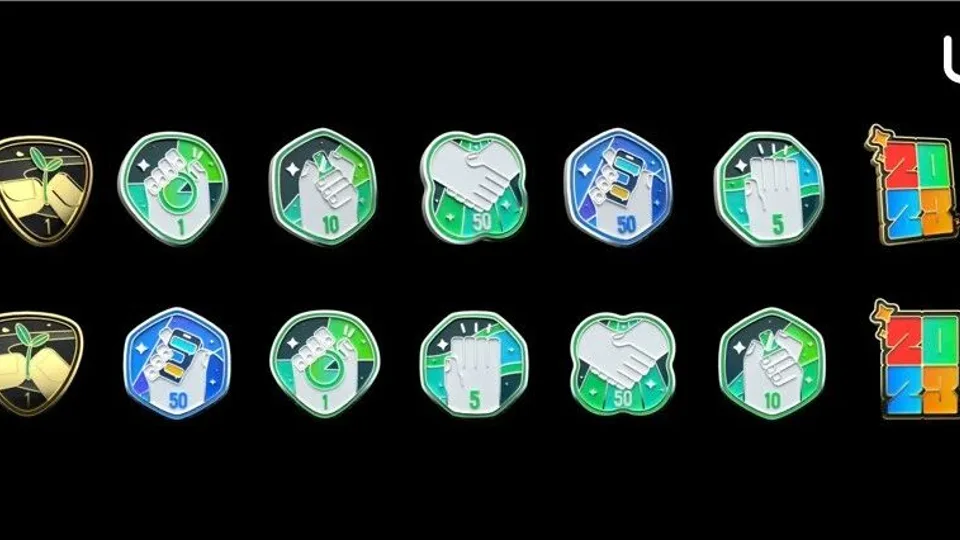
The article outlines how 58招聘 B‑side app created a structured achievement badge system—defining types, levels, visual consistency, and thematic categories—to motivate blue‑collar users, enhance perceived value, improve retention, and encourage sharing, with detailed design guidelines and visual examples.
The article explains how product managers convert boss and user demands into concrete product features by analyzing requirements, creating prototypes, writing clear PRD documents, organizing modules and functions, and visualizing feature structures, while also highlighting the importance of systematic processes for both existing and new products.