This tutorial walks through building a simple Naruto-inspired 3D scene using three.js, covering model acquisition, character creation, keyboard controls, rotation handling, animation state management, camera integration, octree-based collision detection, and troubleshooting common issues such as camera‑character alignment and jump physics.
This article walks you through logging into the IDEA‑based Dou Dizhu plugin, listing available games, launching a match, mastering single‑player and multiplayer modes, and using hidden debug and "fish‑catching" features to keep your chat clean, all with simple # commands.
This article provides a detailed testing guide for short‑term game events, covering their unique challenges, requirement analysis, risk mitigation, test case preparation, execution strategies, communication practices, player experience considerations, log verification, post‑mortem analysis, and activity reuse recommendations.
The article delivers an in‑depth technical dissection of AMD’s FidelityFX Super Resolution 1.0, detailing the EASU spatial upscaling pipeline—its Lanczos2‑based polynomial fitting, 12‑point sampling, gradient calculations, and edge handling—and the RCAS contrast‑adaptive sharpening stage, while also outlining mobile‑friendly optimizations such as half‑precision arithmetic and reduced texture fetches.
This article explores the rise of procedural materials in computer graphics, explaining how algorithm-driven textures in Unreal Engine can generate infinite variations, save time, enhance performance, and integrate with AI, while also discussing workflow, node systems, challenges, and future trends for game developers.
This article explains how Tencent leverages A/B testing across its overseas games, detailing market differences, experimental methodology, multi‑cloud platform compliance, data architecture, and case studies that illustrate how targeted experiments improve user onboarding, gameplay settings, and email‑based re‑engagement.
The paper introduces a pre‑user stratification model that uses covariate‑balancing algorithms to create separate strata for distribution and revenue metrics, ensuring equal user allocation in Vivo game‑center AB tests, which reduces metric variance, improves gray‑release effectiveness, and saves significant investigation effort.
Mobile GPUs rely on tile‑based rendering to cut bandwidth and heat, and Vulkan’s thin drivers, explicit synchronization, and multi‑threaded command buffers let developers exploit this architecture—using proper load actions, subpasses, IDVS, and correctly placed barriers—to achieve notable performance boosts and substantial power savings on mobile devices.
The HuànXing Digital Human platform delivers a real‑time virtual‑character pipeline that combines industrialized asset generation—including hair‑card and strand‑based hair rendering, multi‑Gaussian subsurface‑scattering skin, detailed eye shaders, bone‑driven facial rigs, modular clothing, and physics‑driven hair and cloth—while leveraging AI‑assisted capture and future UE5 Chaos enhancements for personalized 3D avatars.
This article explains how Tencent leverages A/B testing across its overseas games, detailing the current market situation, experimental capabilities, multi‑cloud platform architecture, and case studies that illustrate how data‑driven experiments improve user retention, engagement, and overall business growth.
This tutorial demonstrates how to use Python's pygame library to build a dynamic fireworks simulation, covering module imports, window setup, color configuration, class definition for fireworks particles, and the main loop that renders the animated display.
This tutorial shows how to build a simple 2D platformer using the Alice.js H5 engine combined with React, covering scene construction with JSX components, camera scrolling, UI layering, PixiJS element types, animation formats, flex layout, keyframe hooks, event scripting, and debugging tools.
This article examines the prevalence and causes of FPS game cheats, critiques traditional anti‑cheat methods, and presents NetEase's AI‑driven solution that leverages replay log behavior data to accurately detect perspective and aimbot hacks, improving game fairness and player experience.
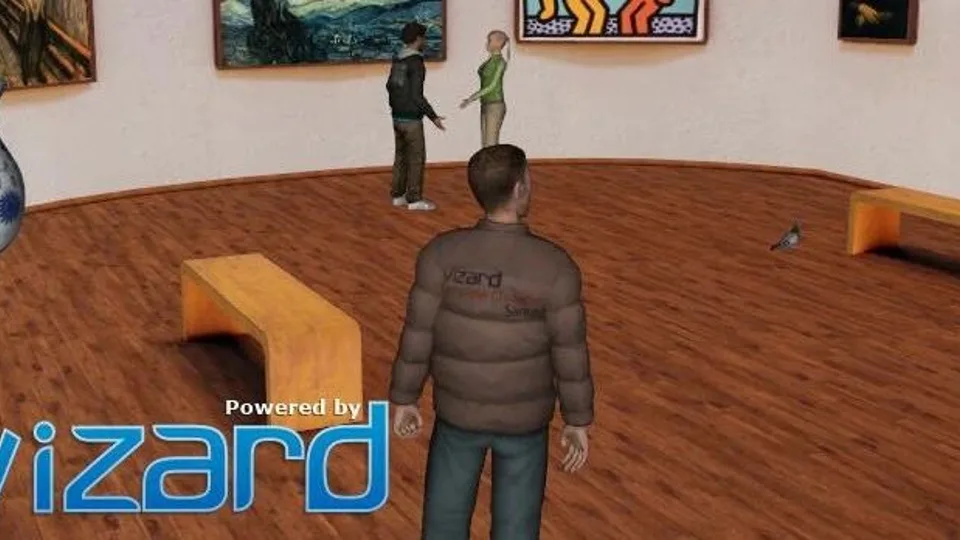
This article introduces Vizard, a C/C++‑based virtual‑reality development platform with Python support, and provides step‑by‑step code examples for loading avatars, creating random pigeon walks, implementing character dialogue, handling movement and mouse input, and showcasing typical VR scene effects.
This article presents a comprehensive method for creating test cases for action role‑playing game (ARPG) levels by analyzing game characteristics, categorising level types, explaining hard and dynamic loading, and detailing a step‑by‑step case‑design workflow that incorporates visual aids such as top‑down maps, perspective sketches and storyboards to improve clarity and coverage.
The paper presents the ‘Post‑Darwin’ evaluation framework, which uses stratified sampling to compare participants and non‑participants across uniform payment layers, overcoming uneven user distributions and the lack of viable A/B tests in game‑business effect analysis, and demonstrates its effectiveness through real‑world promotional and reservation case studies.
Apple is reshaping macOS with a new Game Porting Toolkit and a dedicated Game Mode in macOS Sonoma, enabling easier Windows game migration to Apple Silicon, leveraging DirectX‑to‑Metal translation, while also positioning Macs as future gaming platforms alongside initiatives like Apple Vision Pro.
This comprehensive guide walks through the complete pipeline for creating a 3D virtual digital human—covering material shading, UDIM baking, PBR texture setup, facial and body rigging with Faceit and Auto‑Rig Pro, and animation using Mixamo, Atorcore and NVIDIA Audio2Face.
Explore the fundamentals of cloud gaming and discover how WebRTC's real-time audio‑video, NAT traversal, and data channel technologies enable low‑latency game streaming across devices, with detailed architecture, protocols, and code examples for developers.
This article explains the misconceptions, dual production pipelines, shape‑and‑color reconstruction, Lookdev and PBR workflows, skin rendering details, inverse PBR with LightStage, and 4D‑driven animation techniques required to achieve photorealistic virtual humans for real‑time applications.