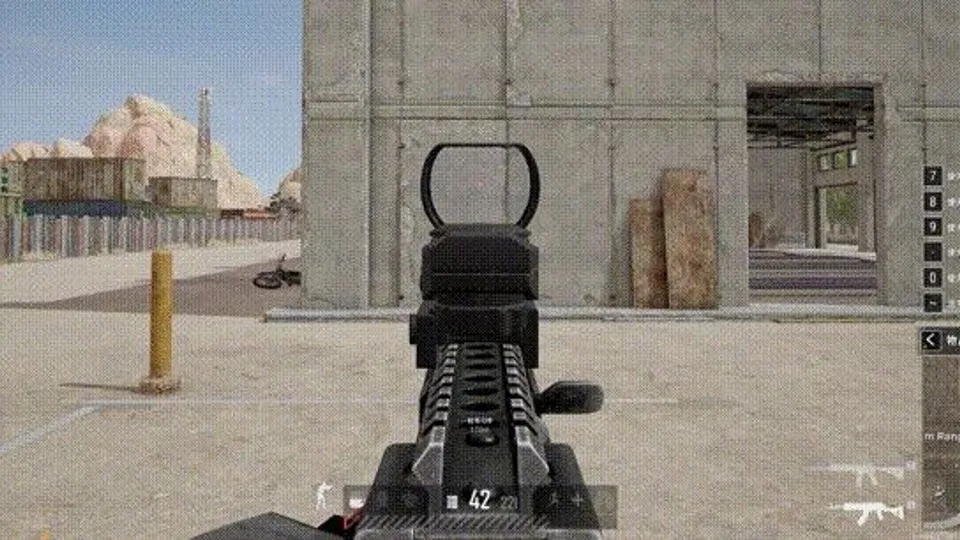
This article explains how to build a Python tool that automatically compensates weapon recoil in PUBG by capturing the screen, recognizing equipment with OpenCV and SSIM, and moving the mouse via pynput, pyautogui, and pydirectinput based on weapon data and user input.
The article presents a cloud‑music social live‑streaming game solution that selects PixiJS over DOM for superior performance, identifies inefficiencies in React‑DOM coupling, and introduces the custom Alice.js framework—bridging React DSL with PixiJS, extending game components, and managing resources—to streamline front‑end game scene development.
This article outlines a comprehensive methodology for creating game experience reports, covering the purpose, various writing scenarios, key questions, audience considerations, core gameplay loops, development processes, competitive analysis, QA sensitivity, and practical tips to produce clear, persuasive, and professional documentation.
The article details a cross‑platform solution for embedding the King of Glory map into Unity, describing a native Android view integration, a three‑layer UI framework with JCE definitions, data‑driven method calls and callbacks, coordinate scaling, immersive mode handling, and Nine‑Patch rendering to achieve rapid, lightweight map deployment.
The article introduces SpaceTraders, an old Palm‑OS strategy game now exposed as a RESTful API, shows curl examples for registration, ship purchase, refueling and trading, and explains how building client applications with this API can serve as an engaging way to learn programming concepts.
This article analyzes the growing need for a unified Unity framework at AutoHome, evaluates existing open‑source Unity architectures, proposes a four‑layer design (logic, middle, base, data), demonstrates a native‑message example, and quantifies quality, efficiency, performance, and reuse gains.
This article explains how to develop sensor‑less motion-controlled games by leveraging the PP‑TinyPose keypoint detection model and FastDeploy inference tool, detailing the required setup, code snippets, and a reusable PyQt5 framework for creating webcam‑driven interactive demos.
This article analyzes the challenges of automating test coverage for a large‑scale MMORPG by classifying representative functional modules, outlining targeted testing strategies for different module characteristics, and proposing framework and script‑library optimizations to efficiently increase coverage and maintainability.
This article explains the rasterization pipeline of GPU‑based 3D rendering, covering model setup, orthographic and perspective projection, viewport transformation, triangle rasterization, bounding‑box optimization, depth buffering, and final pixel shading, using a simple two‑triangle example to illustrate each step.
This article presents a data‑science‑focused guide on using causal inference and uplift models to drive overseas ad targeting and user‑operation decisions in games, covering audience selection, privacy‑aware exposure correction, bid optimization, experiment design pitfalls, network effects, and practical recommendations.
The article explains why early 1980s games such as Contra could deliver rich graphics, music, and scrolling effects within just 128 KB of ROM by using tile‑based graphics, minimal audio data, efficient code, and hardware‑specific tricks, and it reflects on how modern developers perceive data size differently.
This article shares a newcomer’s six‑month experience in game test development, covering automation testing fundamentals, script writing, maintenance practices, tool creation workflows, and cross‑language integration between C#, Lua, PHP, and SQL, offering practical guidance for aspiring test engineers.
This article explains how early 1980s games like Contra fit extensive storylines, graphics, and music into just 128KB by using tile‑based graphics, minimal audio data, and highly optimized code, illustrating the dramatic shift in data expectations as technology advances.
At GDC, Tencent AI Lab demonstrated an AIGC‑driven pipeline that automatically creates massive, realistic 3D city environments—including road networks, diverse building facades, and interior mappings—in weeks instead of years, dramatically accelerating AAA game development.
This case study details how the WeChat Games team designed a 2022 year‑end review that transforms player statistics into an engaging, story‑driven experience by leveraging emotional storytelling, personalized personas, comic‑style visuals, and clever easter eggs to boost shareability and user delight.
This article examines how GPT‑4 and other generative AI technologies are reshaping game development—from art asset creation and storyline generation to level design, coding, NPC dialogue, and the associated challenges of credibility, copyright, and safety.
This article explains how to convert vector‑graphics paths into GPU‑ready triangles by approximating Bézier curves with poly‑lines, simplifying self‑intersecting polygons using the Bentley‑Ottmann sweep‑line algorithm, decomposing simple polygons into monotone pieces, and finally triangulating those monotone polygons.
This tutorial demonstrates how to build a classic "code rain" screen using Python's pygame library, guiding readers through imports, window setup, character rendering, and a concise main loop that produces the animated effect in roughly thirty lines of code.
The article details how Taobao Life’s “Life Cabin” feature was built using the in‑house Hilo3D WebGL engine, describing a pipeline that converts Maya‑exported USD models to GLTF, sets up cameras and controls, manages avatar movement, implements interactive furniture logic, and applies shadow‑map and baked‑light optimizations for smooth performance.
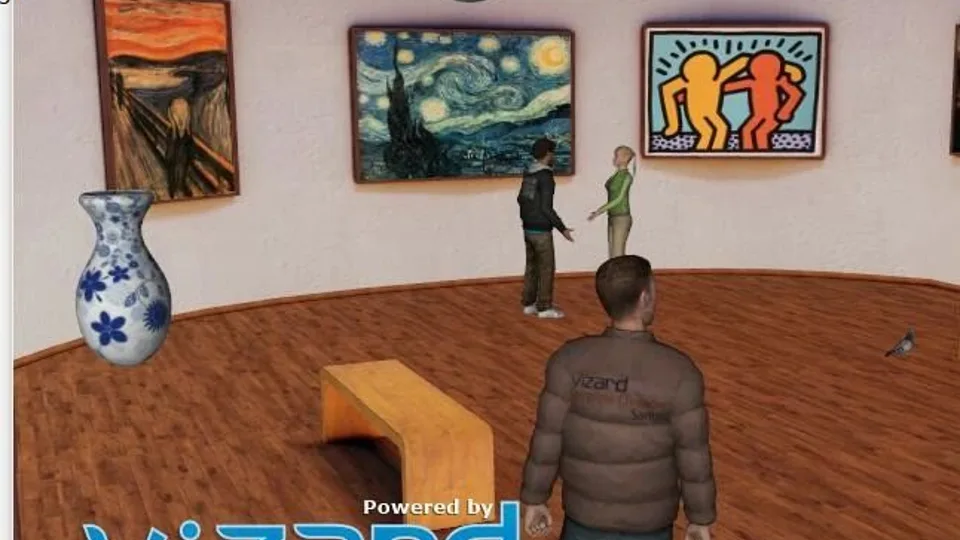
This article introduces Vizard, a C/C++‑based virtual‑reality development platform with Python support, and demonstrates how to load avatars and objects, create random‑walk behavior, implement dialogue actions, control character movement via keyboard, capture mouse input, and combine these techniques into a complete interactive 3D scene.